
 Vietnamese
  Arabic
  Chinese
  English
  French
  German
  Portuguese
  Russian
  Spanish
  Thai
Thai 

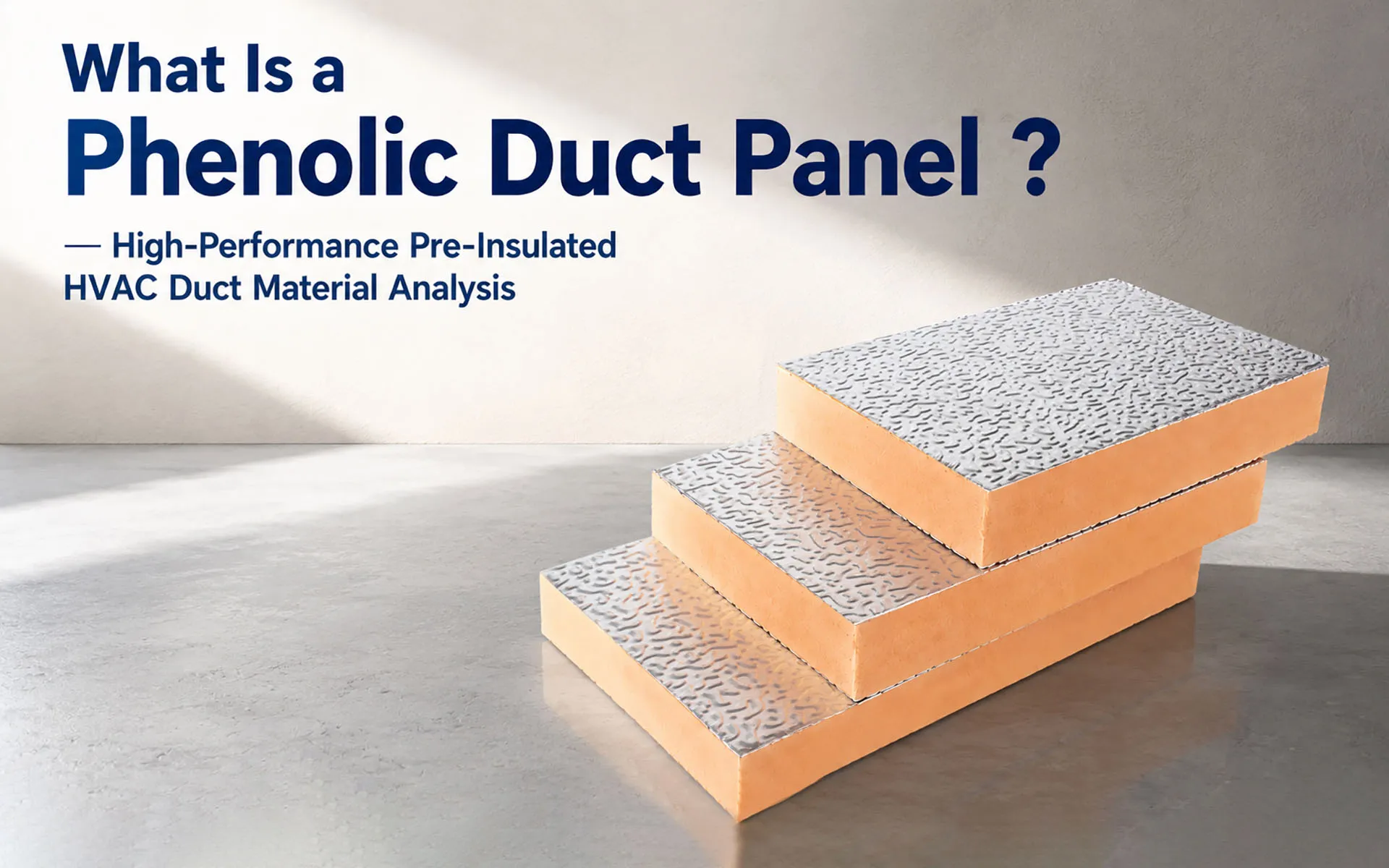
In modern building HVAC systems, energy-efficient HVAC duct systems, installation efficiency, and stable operation have become core requirements. the bảng điều khiển ống phenolic has become one of the widely used pre-insulated HVAC duct materials choice for commercial buildings, industrial facilities, and public infrastructure.
As a high-performance pre-insulated duct system material, the phenolic composite duct uses phenolic foam as its core insulation layer and is encapsulated with aluminum foil or composite facings on both sides. This structure integrates both structural strength and thermal insulation performance.
1. Material Structure and Composition
The phenolic foam insulation board typically consists of three layers:
- Core layer: Phenolic foam insulation material (closed-cell structure)
- Upper and lower facings: Embossed aluminum foil (enhancing strength and moisture resistance)
- Functional facing layer: Can be replaced with different surface materials depending on project requirements, such as color steel sheets or special composite facings
This structure enables the material to provide thermal insulation, structural support, and fire resistance simultaneously.
2. Key Technical Parameters (Based on GFI Product Standards)
According to technical data, the phenolic duct panel offers the following key performance indicators:
- Panel size: 3950 × 1200 mm (thickness 20/25/30 mm)
- Density: 40–60 kg/m³
- Thermal conductivity: 0.025 W/m·K (high energy efficiency performance)
- Fire rating: BS 476 Part 6 & 7 Class 0 / ASTM E84 Class A
- Compressive strength: 0.25 MPa
- Bending strength: 2 MPa
- Water absorption: 0.1%
- Maximum Wind velocity: 13–20 m/s
- Maximum Running temperature: 80°C
These parameters demonstrate that the material performs strongly in thermal insulation, fire safety, and structural stability.

3. Key Performance Advantages
1. High Thermal Insulation Efficiency
Phenolic foam has an extremely low thermal conductivity (around 0.025 W/m·K), significantly reducing heat gain or loss in duct systems and improving overall HVAC energy efficiency.
2. Excellent Fire Performance
The material complies with BS 476 and ASTM E84 Class A standards, offering improved fire performance and flame-retardant characteristics, improving building fire safety levels.
3. Lightweight Structure Design
Compared with traditional galvanized steel ducts with external insulation, phenolic duct panels are significantly lighter, reducing building load and installation difficulty.
4. Low Water Absorption and Moisture Resistance
The closed-cell structure results in a water absorption rate of only 0.1%, effectively preventing condensation and mold growth, making it suitable for high-humidity environments.
4. Application Advantages in HVAC Systems
Phenolic duct panels are widely used in:
- Commercial complexes
- Hospitals and laboratories
- Airports and metro systems
- Data centers and clean rooms
- Industrial ventilation systems
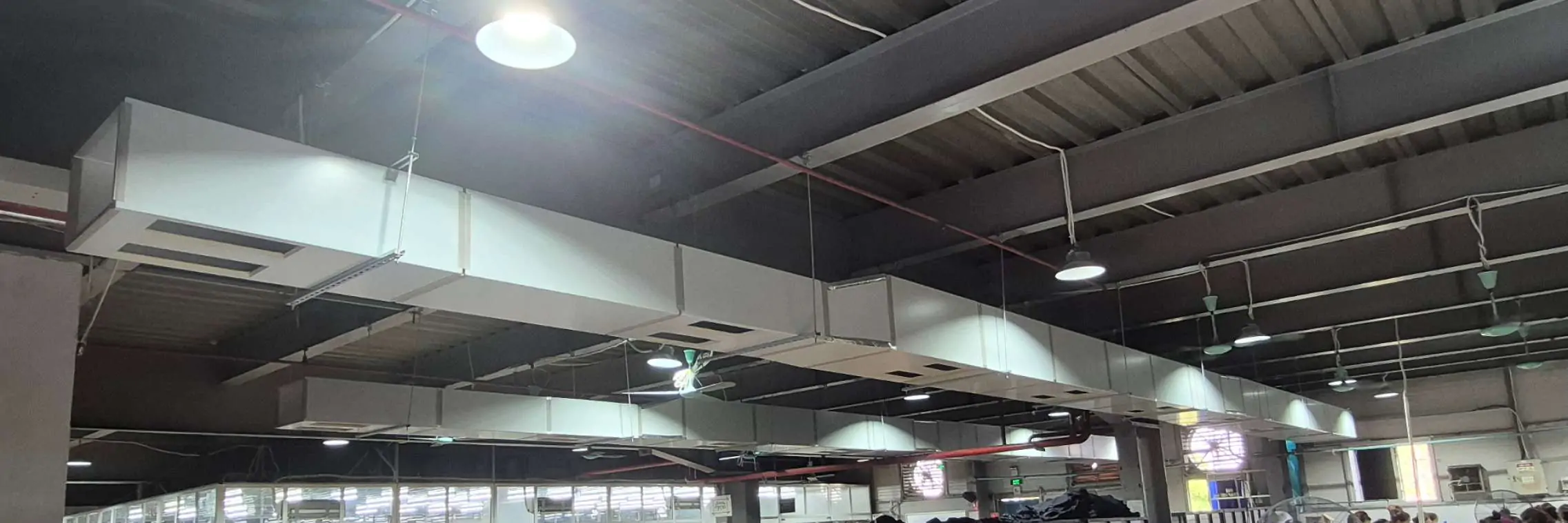
Its integrated pre-insulated duct structure reduces or eliminates additional external insulation requirements in many HVAC applications, significantly improving installation efficiency while ensuring airtightness and long-term system stability.
5. Comparison with Traditional Duct Systems
Compared with traditional galvanized steel duct systems:
- Phenolic duct panel eliminate external insulation work
- Reduce air leakage rates
- Improve installation speed and consistency
- Significantly enhance energy efficiency
As a result, it is becoming an increasingly important solution for modern HVAC system upgrades.

Phần kết luận
As a next-generation pre-insulated duct material, the phenolic duct panel is rapidly gaining global adoption in HVAC engineering due to its excellent thermal insulation performance, lightweight structure, and high fire resistance rating.
With the continuous advancement of green building standards and energy-saving requirements, this material will play an even more important role in future HVAC systems.
LIÊN HỆ
Hãy để lại lời nhắn và nhóm của chúng tôi sẽ liên hệ lại với bạn sớm nhất.