
 Vietnamese
  Arabic
  Chinese
  English
  French
  German
  Portuguese
  Russian
  Spanish
  Thai
Thai 

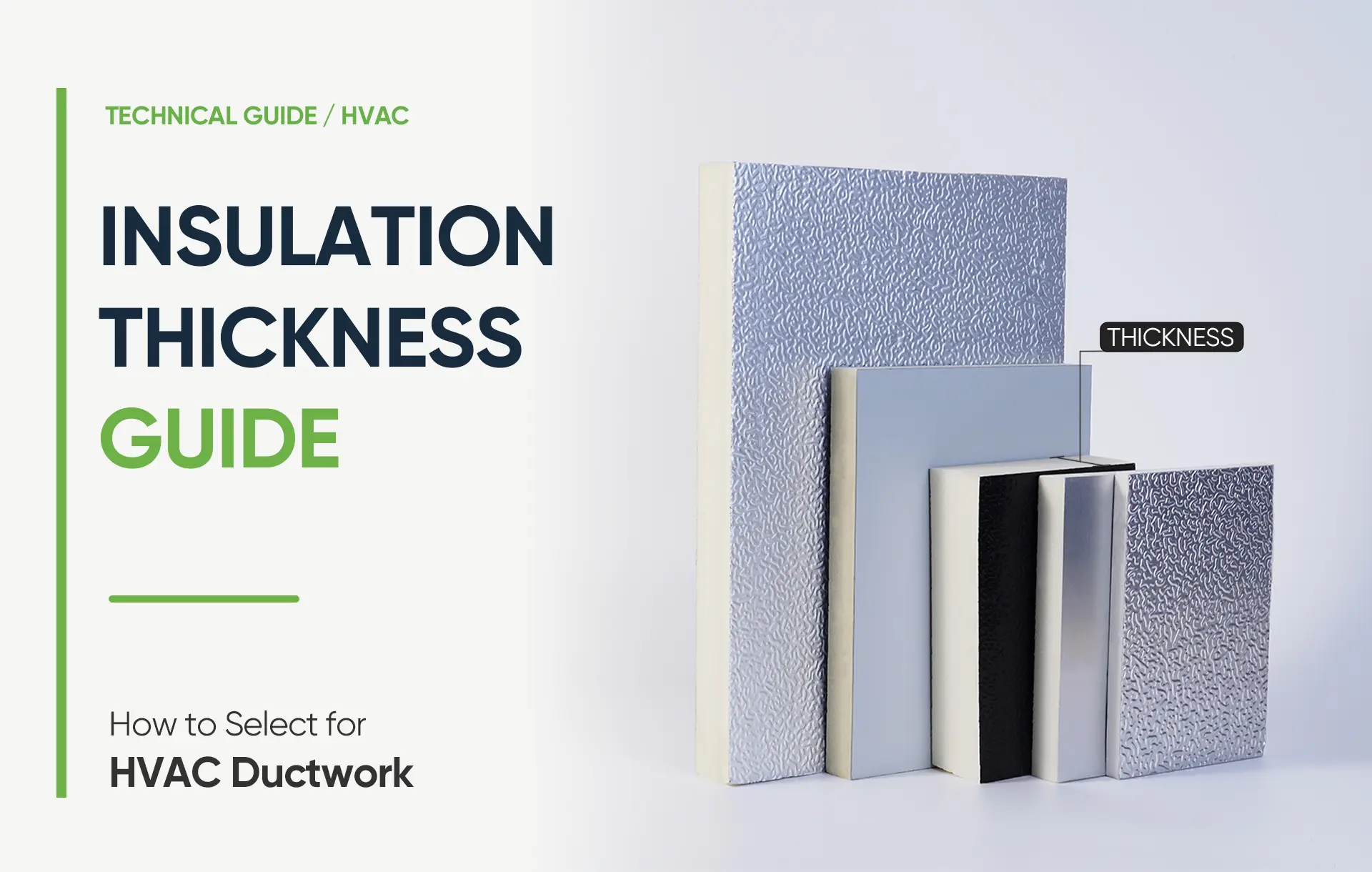
HVAC ductwork insulation plays an important role in maintaining system efficiency, controlling energy consumption, preventing condensation, and improving indoor comfort. However, selecting the right insulation thickness is not simply a matter of choosing the thickest available material. If the insulation is too thin, heat gain or heat loss can increase, condensation may occur. If it is unnecessarily thick, material costs, installation space, and overall project expenses can increase.
This article explains how to select the right thickness for PIR and phenolic pre-insulated duct panels. Which are widely used in modern HVAC ductwork and ventilation systems. Although these products follow standardized thickness selection methods. Engineers should consider regional climate, duct installation location, supply air temperature, and applicable local building codes and standards when determining the appropriate thickness.
Four Key Factors for Selecting Pre-Insulated Duct Panels Insulation Thickness
1. Thermal Conductivity of the Duct panel Core Material
Different insulation materials provide significantly different levels of thermal resistance. Which directly affects the minimum insulation thickness required for a duct system:
- PIRair duct panels: Thermal conductivity of approximately λ = 0.019–0.025 W/(m·K) . PIR provides excellent thermal insulation, and a thickness of 10–25 mm can generally meet the requirements for conventional indoor cooling ducts.
- Phenolic duct panels: Thermal conductivity of approximately λ = 0.023–0.030 W/(m·K). Phenolic foam offers excellent fire performance, and engineers may choose a thickness of 20–30 mm for high-humidity environments.
- Fiberglass wool / rock wool insulation:Thermal conductivity of ≥0.035 W/(m·K). Compared with PIR or phenolic foam, these materials require a thicker insulation layer to achieve the same thermal resistance. In many applications, engineers may need to increase the thickness by approximately 10 mm.
2. Supply Air Temperature and Temperature Difference
A larger temperature difference between the air inside the ductwork and the surrounding environment generally requires a thicker insulation layer:
- Conventional cooling ductswith a supply air temperature of 10–16°C in indoor environments: a minimum thickness of 10 mm may generally suit PIR pre-insulated duct panels.
- Low-temperature supply air ductsin cold storage facilities or cleanrooms, with supply air temperatures of 4–10°C: engineers typically consider a core thickness of 25–35 mm.
- Heating air ductswith supply air temperatures of 40–80°C: 20–30 mm insulation layer can help reduce heat loss and maintain thermal efficiency.
3. Duct Installation Location and Ambient Humidity
The installation environment plays a critical role in condensation control and insulation thickness selection:
- Indoor suspended ceilingswith a relative humidity below75%: engineers can typically select 20-30 mm pre-insulated duct panels.
- Unconditioned attics, basements, and high-humidity equipment roomswith relative humidity between 75% and 85%: consider increasing the insulation thickness by approximately 10 mm and using a continuous aluminum foil vapor barrier with properly sealed joints.
- Outdoor exposed ducts:consider increasing the overall insulation thickness by 10–15 mm and adding a metal protective layer to protect the duct system from rain, UV exposure, and other environmental conditions.
4. Regional Climate and Industry Standards
International standards and building codes, such as ASHRAE 90.1 and the International Energy Conservation Code (IECC). Establish minimum thermal performance requirements based on climate zones:
- Hot and humid tropical regions: supply air ducts may require a minimum thermal resistance of R-6, which can correspond to approximately 20 mm PIR panels.
- Temperate regions with mixed wet and dry conditions:supply air ducts may require approximately R-8, for which engineers may consider 25 mm PIR panels.
- Cold and severe winter climates:supply air ducts may require approximately R-12, making 35–40 mm core thickness a potential choice depending on the project requirements and thermal calculations.
General Reference Guide for PIR and Phenolic Pre-Insulated Duct Thickness
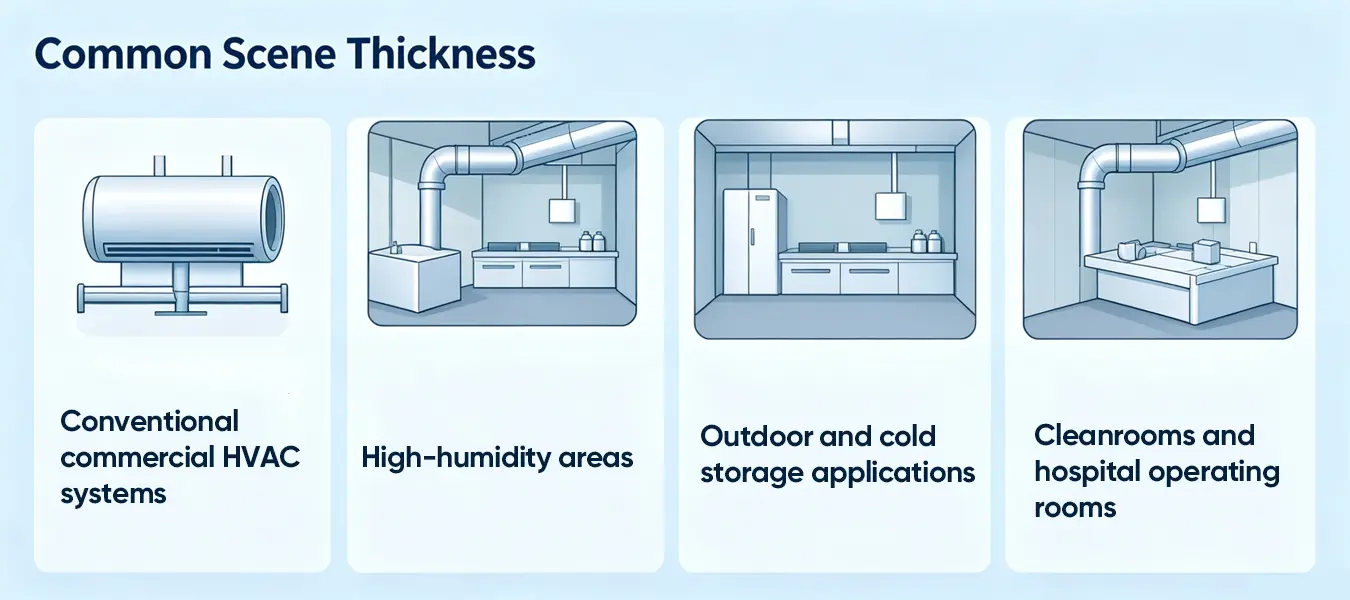
- Conventional commercial HVAC ductwork system:For indoor supply air ducts in offices, shopping malls, and hotels, 20 mm duct panels commonly provide a practical starting point.
- High-humidity areas:For basements with high humidity and kitchen exhaust ductwork, engineers can consider 25–30 mm panels to improve thermal performance and condensation control.
- Outdoor and cold storage applications:Outdoor exposed ductwork and cold storage supply air systems typically require 30–40 mm panels to provide greater thermal resistance and help maintain stable operating conditions.
- Cleanrooms and hospital operating rooms:These applications may require 35 mm or thicker panels. Engineers should also evaluate additional acoustic requirements where noise control plays an important role.
Engineering Risks of Incorrect Pre-Insulated Duct Insulation Thickness
Selecting the wrong insulation thickness can create a range of problems for HVAC ductwork and ventilation systems. Both insufficient and excessive insulation can affect system performance, installation efficiency, and overall project costs.
Insufficient Insulation Thickness
- Condensation and Water Droplets
When the outer surface temperature of the duct falls below the ambient dew point, condensation can form over large areas and cause water droplets to accumulate. - Mold Growth and Structural Corrosion
Persistent condensation can promote mold growth and corrode metal supports, significantly reducing the overall service life of the duct system. - Increased Energy Consumption
Insufficient insulation allows excessive cooling loss through the ductwork, which can increase HVAC system energy consumption by approximately 10%–20%.
Excessive Insulation Thickness
- Higher Material Costs and Reduced Installation Space
Excessively thick panels increase material procurement costs and occupy more space within suspended ceilings - More Difficult Fabrication and Higher Material Waste
Thicker panels can make CNC cutting and manual bending more difficult, while increasing fabrication complexity and material waste. - Higher Transportation and Installation Costs
Excessive insulation thickness increases transportation and labor costs. In some projects, the additional energy savings may not offset the extra investment in materials, transportation, and installation.
Phần kết luận
PIR and phenolic pre-insulated duct panels offer a highly cost-effective solution for HVAC ductwork and ventilation projects worldwide. Engineers can select the appropriate panel thickness based on temperature, humidity, and local building codes. By using duct fabrication equipment that matches the selected panel thickness. Contractors can reduce material waste and improve the quality and consistency of finished ductwork.
LIÊN HỆ
Hãy để lại lời nhắn và nhóm của chúng tôi sẽ liên hệ lại với bạn sớm nhất.