
 Vietnamese
  Arabic
  Chinese
  English
  French
  German
  Portuguese
  Russian
  Spanish
  Thai
Thai 


In modern HVAC projects, installation efficiency has become one of the decisive factors for project success. Rising labor costs, compressed schedules, and increasing site coordination complexity are exposing the limitations of traditional heavy galvanized steel duct systems. In contrast, lightweight duct systems—especially pre-insulated ductwork—are increasingly being adopted as a practical alternative.
This article analyzes the real, on-site impact of lightweight duct systems on construction efficiency from a practical engineering perspective.
1. Weight Difference Directly Determines Installation Speed
Traditional galvanized steel duct systems consist of multiple layers, including metal ductwork, insulation, and external cladding.
As a result, they are heavy and typically require:
- Multiple workers for handling
- Lifting equipment for installation
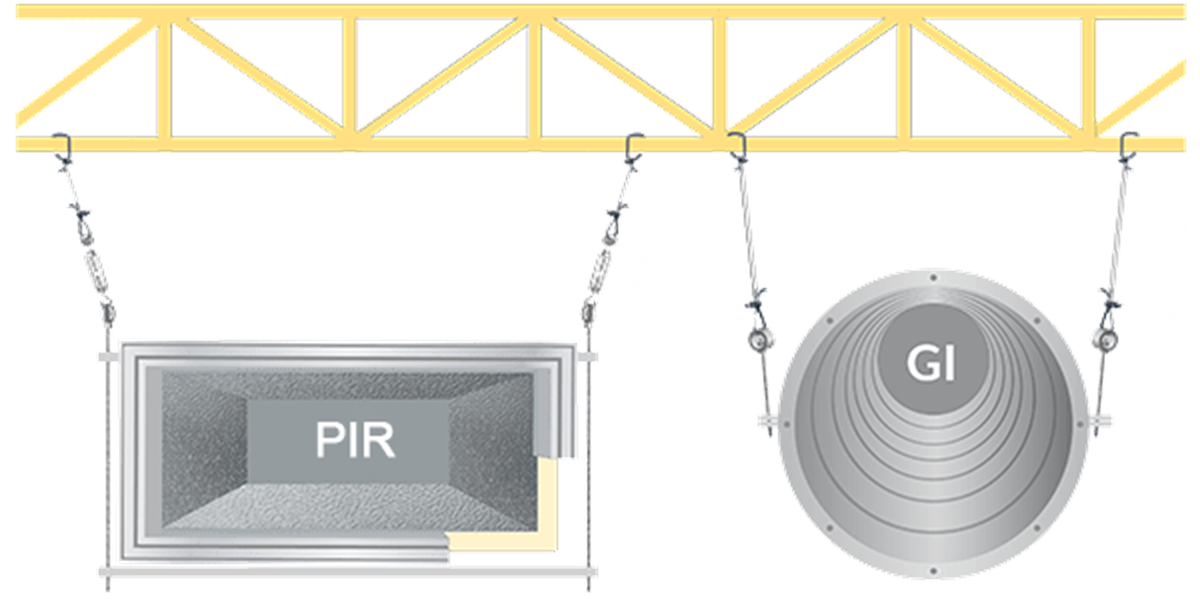
- More complex hanger and support structures
Lightweight duct systems, such as PIR or phenolic pre-insulated ducts, integrate the duct and insulation into a single panel. Their weight is typically only 1/4 to 1/5 of conventional systems.
Practical impact:
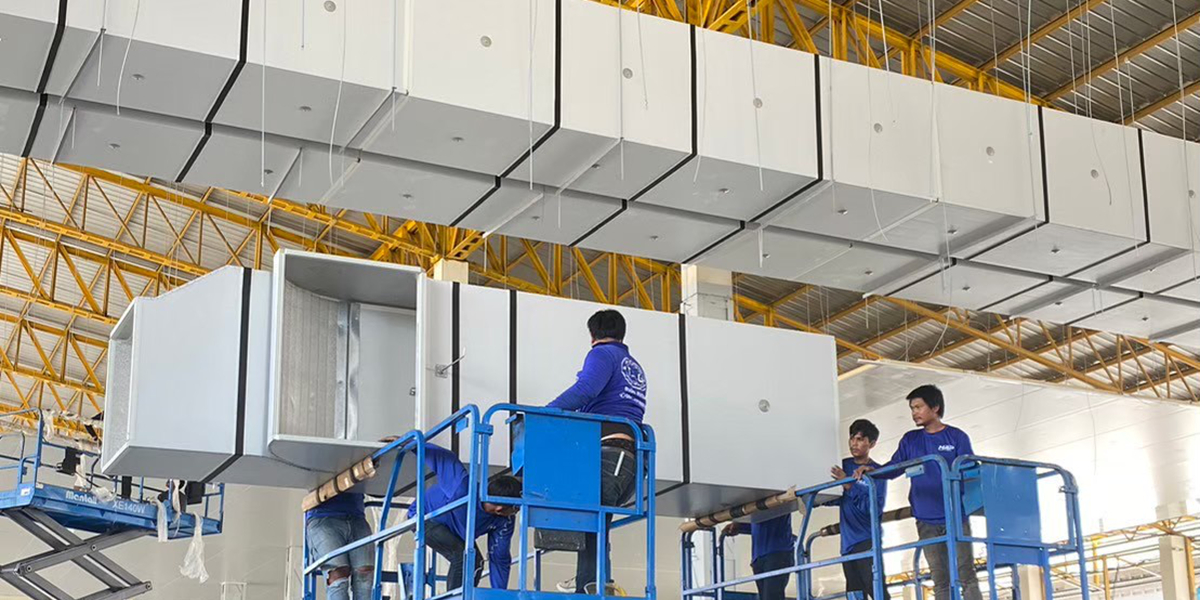
- One or two workers can handle most duct sections
- Safer and faster overhead installation
- Significantly reduced lifting and positioning time
2. Fewer Installation Steps, Faster On-Site Progress
A traditional metal duct installation usually involves:
- Duct fabrication
- On-site assembly
- Insulation application
- External cladding
- Secondary repairs and adjustments
Lightweight pre-insulated duct systems simplify this process by integrating multiple steps:
- Duct and insulation formed as one system
- On-site work focuses on cutting, joining, and sealing
Fewer installation steps mean less waiting time on site, which is especially important in projects with multiple trades working simultaneously.
3. Lower Dependency on Highly Skilled Labor
Metal duct systems rely heavily on experienced workers for:
- Accurate sheet metal fabrication
- Consistent insulation thickness
- High-quality external cladding installation
Lightweight duct systems use standardized panels and connection methods, offering greater consistency and reducing reliance on highly skilled labor.
This advantage is particularly evident in:
- Overseas projects
- Fast-track construction schedules
- Regions with unstable or limited skilled labor availability

4. Reduced Site Management and Coordination Costs
In real-world projects, duct installation often conflicts with:
- Lifting schedules
- Scaffold usage
- Fire protection, electrical, and interior finishing works
Due to their lighter weight and faster installation, lightweight duct systems reduce the time each zone is occupied, lowering the likelihood of trade conflicts.
Results include:
- Better control of construction milestones
- Fewer rework issues
- More predictable overall project timelines

5. Cumulative Time Savings in Large-Scale Projects
While time savings on a single duct section may seem modest, the cumulative effect becomes significant in large projects such as:
- Commercial complexes
- Hospitals
- Data centers
- Industrial facilities
Project experience shows that lightweight duct systems can:
- Shorten overall duct installation time by 20–30%
- Significantly reduce on-site labor costs
- Improve delivery reliability for large HVAC packages

Phần kết luận
Lightweight duct systems are not simply about reducing weight—they fundamentally change the installation logic of HVAC ductwork. By minimizing handling effort, simplifying installation steps, and reducing labor dependency, they deliver measurable improvements in construction efficiency under real site conditions.
GFI provides a range of high-performance pre-insulated duct solutions for commercial, medical, and industrial HVAC projects, helping contractors improve installation efficiency while maintaining system performance.
For duct system solutions tailored to your project requirements, feel free to contact GFI.

LIÊN HỆ
Hãy để lại lời nhắn và nhóm của chúng tôi sẽ liên hệ lại với bạn sớm nhất.