
 Vietnamese
  Arabic
  Chinese
  English
  French
  German
  Portuguese
  Russian
  Spanish
  Thai
Thai 

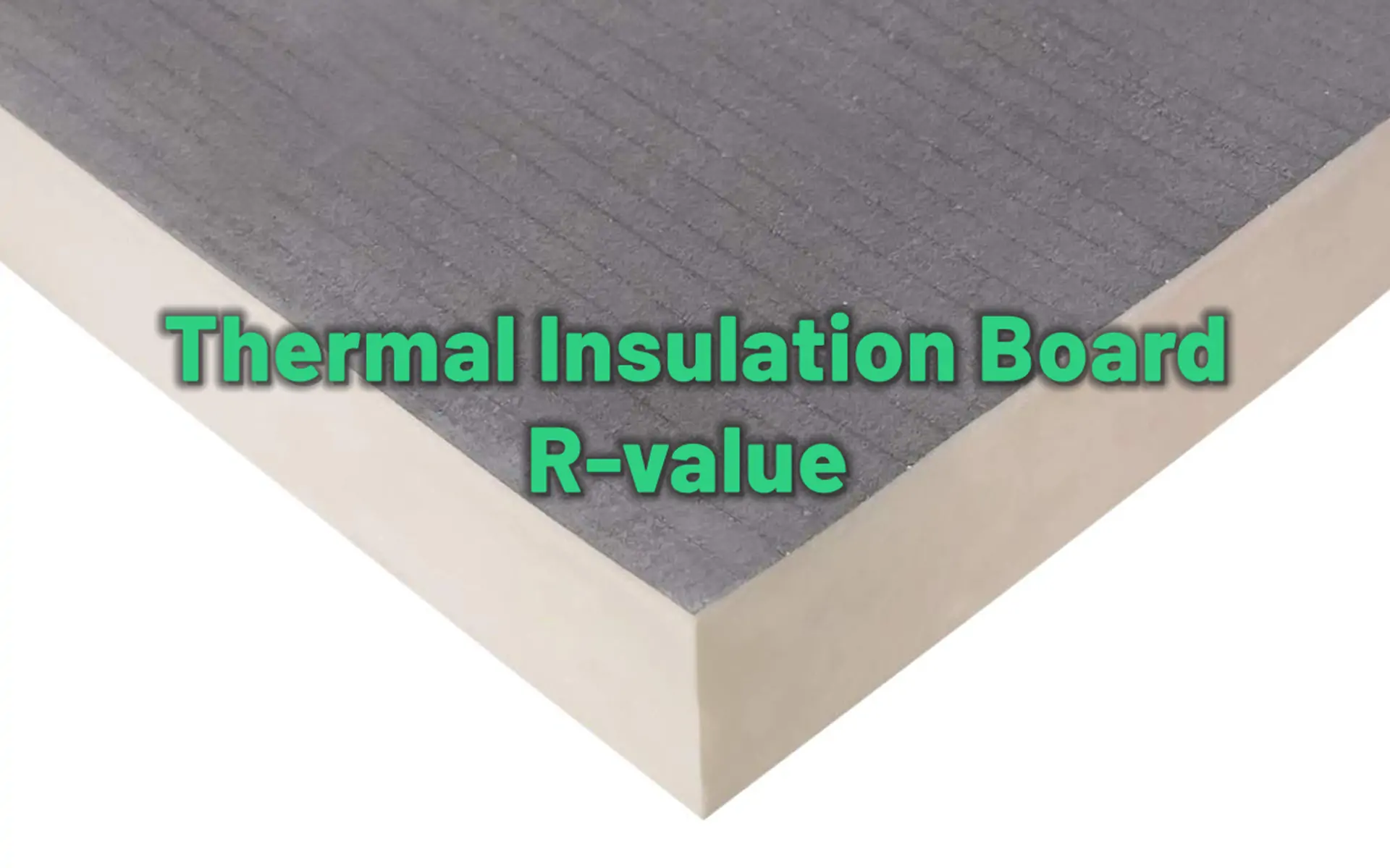
A Guide to Thermal Performance in HVAC and Building Applications
Rising energy costs and stricter efficiency standards have made thermal insulation a critical factor in both HVAC design and modern construction. The ability of a material to resist heat transfer directly affects indoor comfort, operational energy savings, and long-term building performance.
Among today’s insulation materials, PIR (Polyisocyanurate) foam board stands out for delivering a high thermal resistance in thinner layers compared to conventional products. The key performance metric is the R-value. In this guide, we’ll explain what the PIR insulation R-value means, how it compares with polyurethane and other insulation materials, and why it matters for energy-efficient projects.

What Is R-Value in PIR?
The R-value measures how well a material resists heat flow. The higher the R-value, the better the insulation. In HVAC systems, especially in ducting and panel applications, selecting materials with a higher R-value helps reduce heat loss, maintain consistent temperatures, and improve system efficiency.
PIR insulation is considered one of the best-performing rigid foam materials, offering a higher R-value per unit thickness than many alternatives such as polyurethane and EPS.
Typical R-Values for PIR
Among rigid foam materials, PIR foam board offers one of the highest R-values per inch. Below is a reference chart of standard thicknesses and their approximate R-values(U.S. customary):
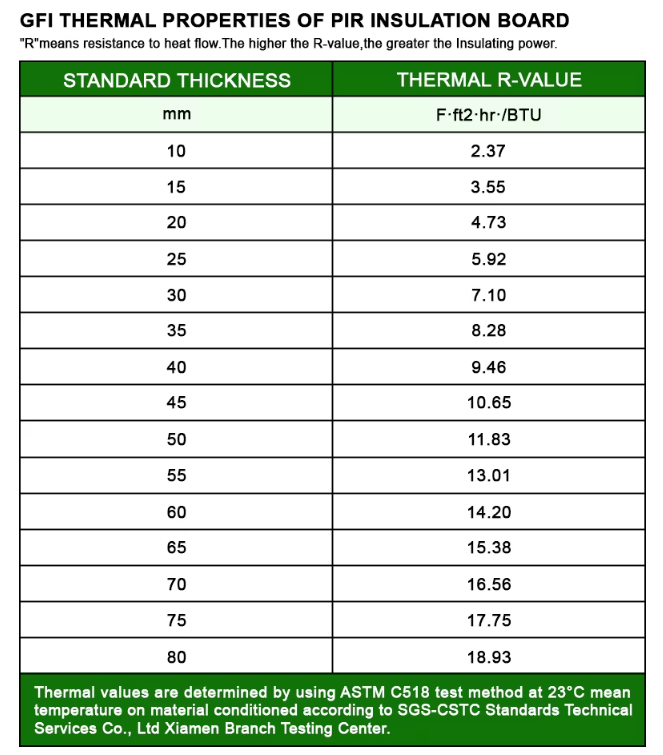
Note: The actual PIR insulation R value may vary depending on foam density, facing, and test conditions.
Key Factors Influencing PIR Insulation R Value
- Foam Core Density – Higher-density PIR improves resistance to heat transfer.
- Đối diện – Helps enhance overall thermal resistance and moisture control.
- Aging Performance – PIR maintains a more stable R-value over time than standard polyurethane board insulation.
- Closed-Cell Structure – Blocks moisture and vapor, keeping thermal performance consistent in humid environments.
Conclusion: Why Choose PIR Foam Board for High R-Value Projects?
When thermal efficiency, long-term durability, and lightweight structure are essential, PIR foam board stands out as a top-performing thermal insulating board. Its superior R-value, moisture resistance, and installation flexibility make it ideal for HVAC ductwork, roofing insulation, and energy-saving building applications.
- ✅ Available in 10mm–80mm thickness
- ✅ Thermal Conductivity <=0,024W/mK
- ✅ Durable facing for thermal and vapor control
- ✅ Suitable for commercial HVAC, roofing, and wall insulation systems
📩 Contact GFIDuct today for tailored recommendations on PIR insulation R value and system design support.
🌐 Visit GFIDuct to explore our complete range of polyurethane board insulation and PIR foam board solutions.

LIÊN HỆ
Hãy để lại lời nhắn và nhóm của chúng tôi sẽ liên hệ lại với bạn sớm nhất.