
 Russian
  Arabic
  Chinese
  English
  French
  German
  Portuguese
  Spanish
  Thai
Thai  Vietnamese

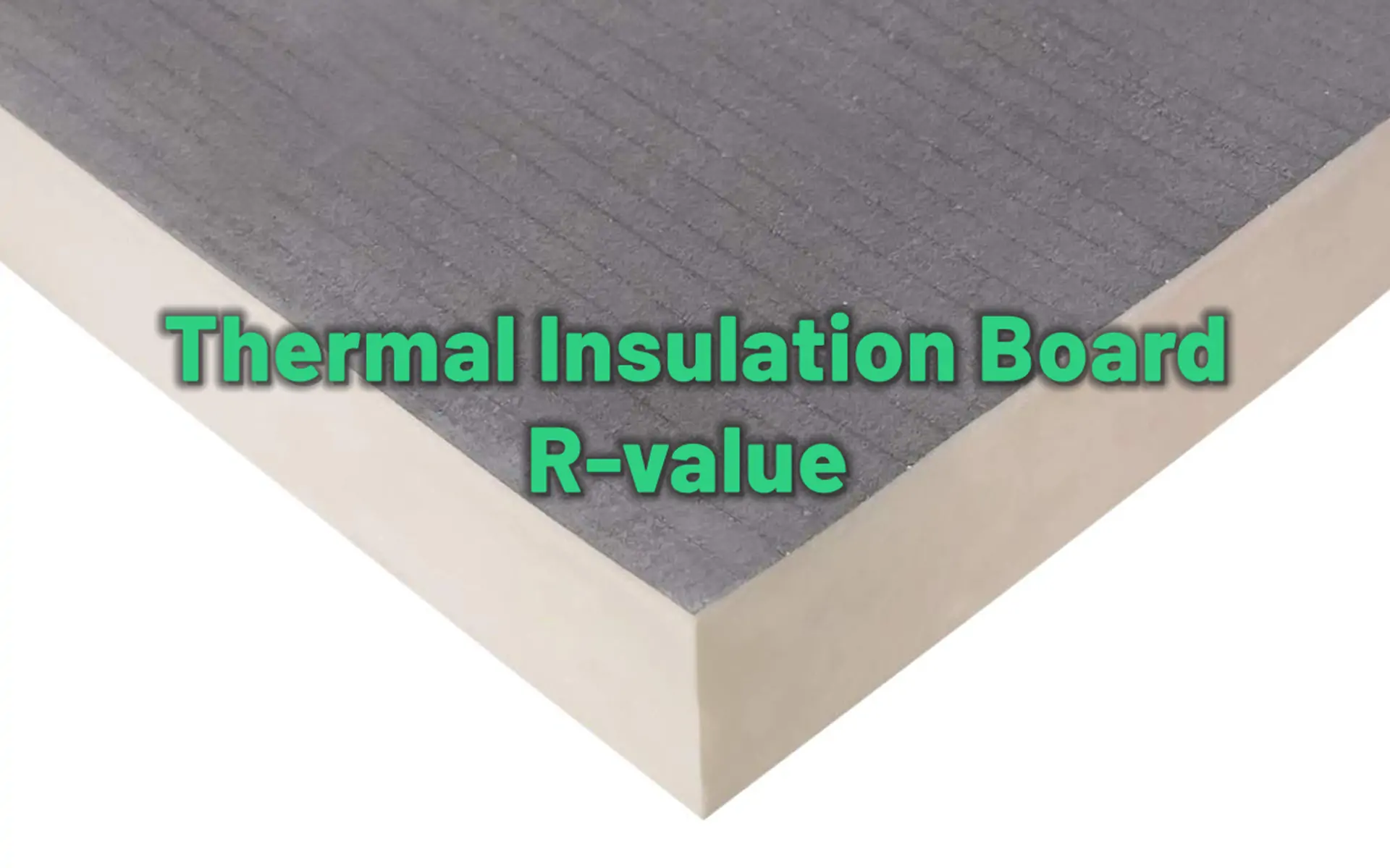
A Guide to Thermal Performance in HVAC and Building Applications
Rising energy costs and stricter efficiency standards have made thermal insulation a critical factor in both HVAC design and modern construction. The ability of a material to resist heat transfer directly affects indoor comfort, operational energy savings, and long-term building performance.
Among today’s insulation materials, PIR (Polyisocyanurate) foam board stands out for delivering a high thermal resistance in thinner layers compared to conventional products. The key performance metric is the R-value. In this guide, we’ll explain what the PIR insulation R-value means, how it compares with polyurethane and other insulation materials, and why it matters for energy-efficient projects.

What Is R-Value in PIR?
The R-value measures how well a material resists heat flow. The higher the R-value, the better the insulation. In HVAC systems, especially in ducting and panel applications, selecting materials with a higher R-value helps reduce heat loss, maintain consistent temperatures, and improve system efficiency.
PIR insulation is considered one of the best-performing rigid foam materials, offering a higher R-value per unit thickness than many alternatives such as polyurethane and EPS.
Typical R-Values for PIR
Among rigid foam materials, PIR foam board offers one of the highest R-values per inch. Below is a reference chart of standard thicknesses and their approximate R-values(U.S. customary):
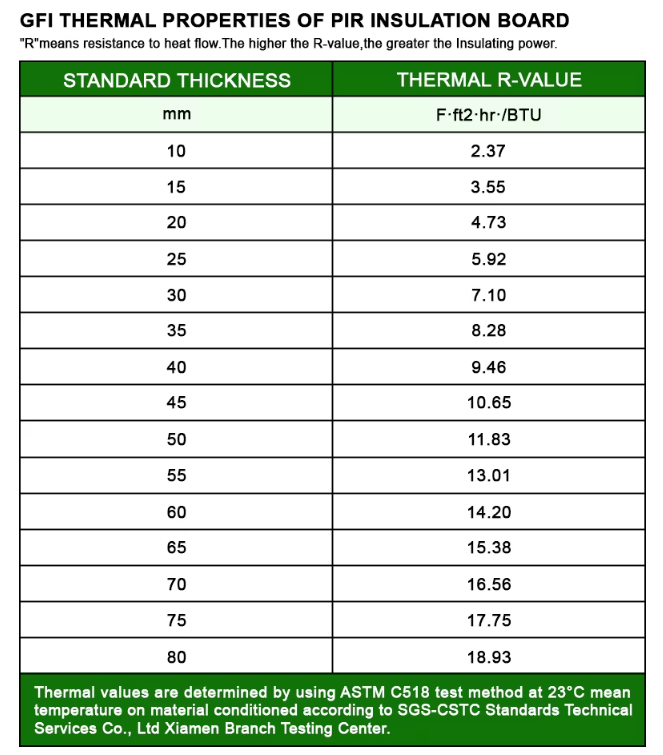
Note: The actual PIR insulation R value may vary depending on foam density, facing, and test conditions.
Key Factors Influencing PIR Insulation R Value
- Foam Core Density – Higher-density PIR improves resistance to heat transfer.
- Facing – Helps enhance overall thermal resistance and moisture control.
- Aging Performance – PIR maintains a more stable R-value over time than standard polyurethane board insulation.
- Closed-Cell Structure – Blocks moisture and vapor, keeping thermal performance consistent in humid environments.
Conclusion: Why Choose PIR Foam Board for High R-Value Projects?
When thermal efficiency, long-term durability, and lightweight structure are essential, PIR foam board stands out as a top-performing thermal insulating board. Its superior R-value, moisture resistance, and installation flexibility make it ideal for HVAC ductwork, roofing insulation, and energy-saving building applications.
- ✅ Available in 10mm–80mm thickness
- ✅ Thermal Conductivity <=0,024 Вт/м.K
- ✅ Durable facing for thermal and vapor control
- ✅ Suitable for commercial HVAC, roofing, and wall insulation systems
📩 Contact GFIDuct today for tailored recommendations on PIR insulation R value and system design support.
🌐 Visit GFIDuct to explore our complete range of polyurethane board insulation and PIR foam board solutions.

CONTACT US
Leave us a message and our team will get back to you soon.