
 English
  Arabic
  Chinese
  French
  German
  Portuguese
  Russian
  Spanish
  Thai
Thai  Vietnamese

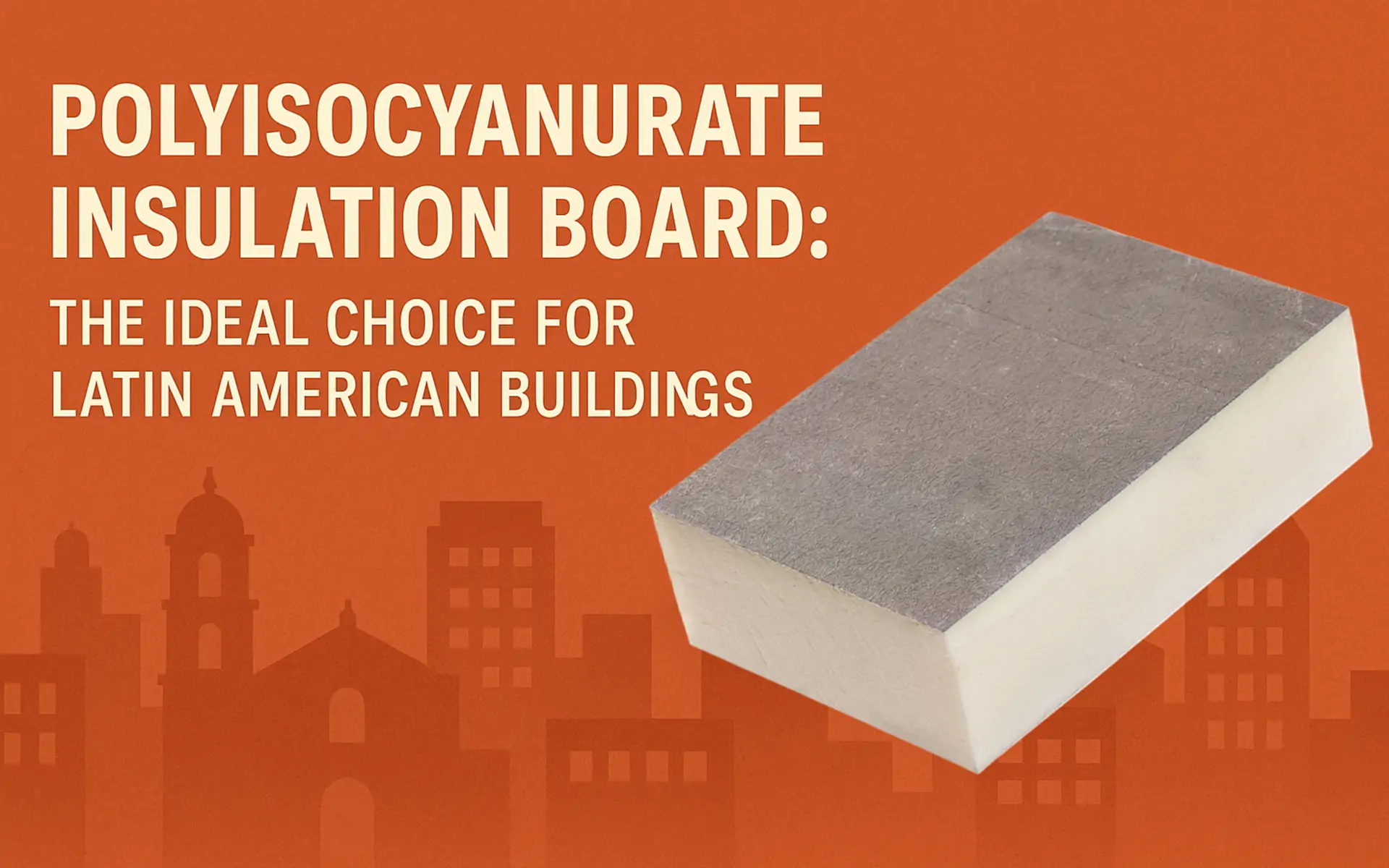
Polyisocyanurate Insulation Board: The Ideal Choice for Latin American Buildings
In Latin America’s hot, humid, and climate-variable conditions, choosing the right insulation boards is essential for improving building energy efficiency, indoor comfort, and long-term durability. High-performance Polyisocyanurate Insulation Board (PIR) offers exceptional thermal resistance, fire safety, and moisture control—delivering reliable protection against heat, humidity, and weather changes. Ideal for residential, commercial, and industrial projects, these rigid foam boards help reduce cooling costs, extend building lifespan, and support sustainable construction.
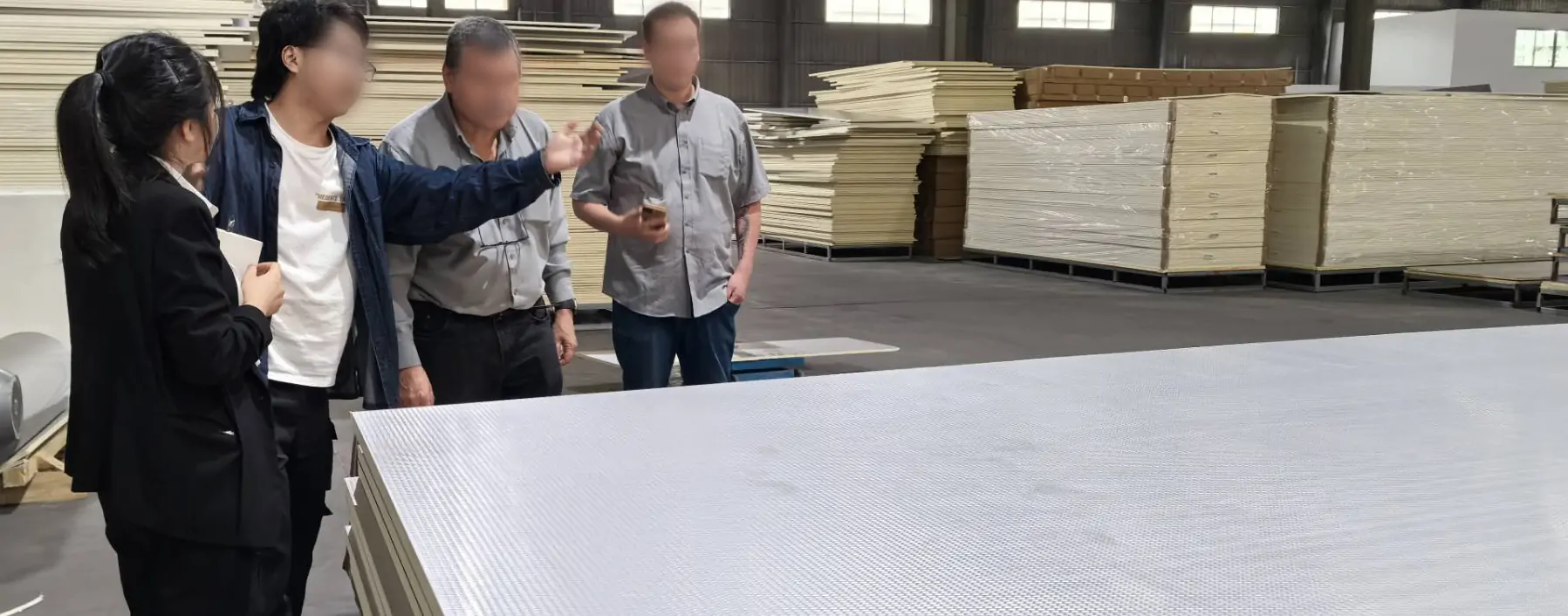
Superior Thermal Performance
With a thermal conductivity as low as 0.022 W/m·K, rigid PIR foam insulation deliver excellent thermal resistance compared to conventional insulation materials. In hot regions, they effectively block outdoor heat from entering indoor spaces, reducing air conditioning energy consumption. In high-altitude areas with large day–night temperature swings, they help maintain indoor warmth and comfort.

Fire Resistance and Moisture Protection
The PIR core, sandwiched between double aluminum or fiberglass facings, reflects radiant heat and resists moisture penetration. Its fire performance is outstanding—minimizing dripping and slowing flame spread—making it especially suitable for coastal regions and tropical climates in Latin America.

Lightweight and Easy to Install
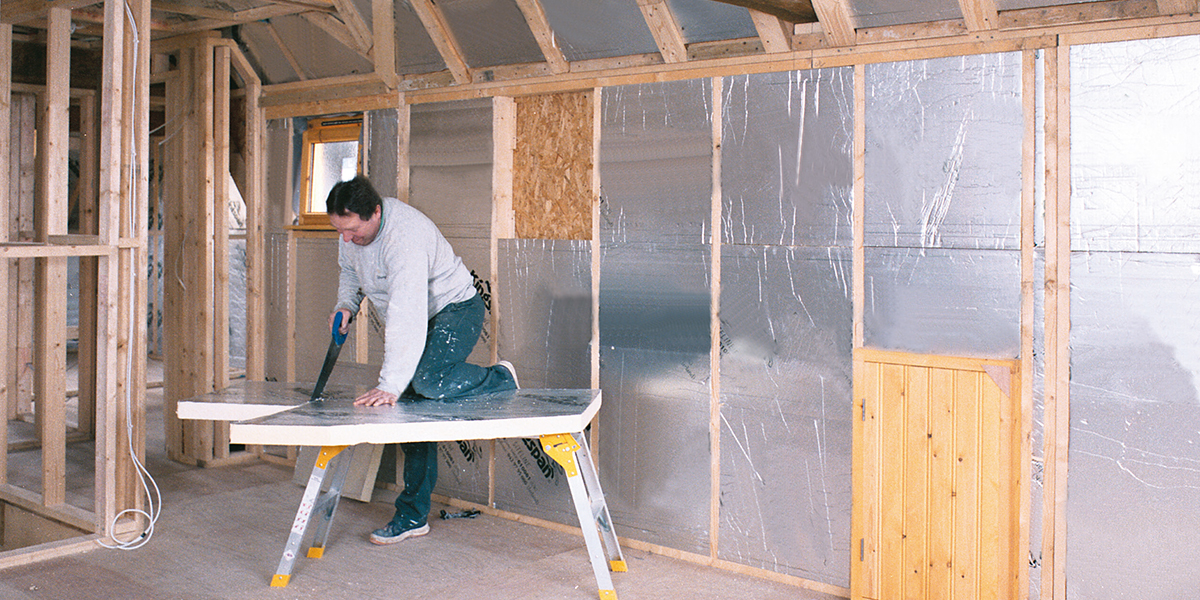
Lightweight rigid PIR PIR thermal insulation panels are easy to handle and transport, even in high-rise construction, without requiring heavy equipment. Suitable for concrete walls, masonry, steel, and timber frame structures, Polyisocyanurate insulation boards can be fixed using mechanical fasteners or adhesive bonding, reducing installation time and labor costs.

Installation Recommendations
Surface Preparation – Ensure the wall or cavity is clean, dry, and free from debris.
Fixing Methods:
- Mechanical Fixing – Use stainless steel screws or special nails at ~600 mm intervals.
- Adhesive Bonding – Apply adhesive continuously along board edges and add central bonding points.
Sealing Joints – Apply sealant to board joints to prevent air and moisture ingress.
Storage – Store flat in a dry, ventilated area away from direct sunlight and rain, stacking no more than three layers.
GFI vs. Mainstream Polyisocyanurate Insulation Boards in Latin America
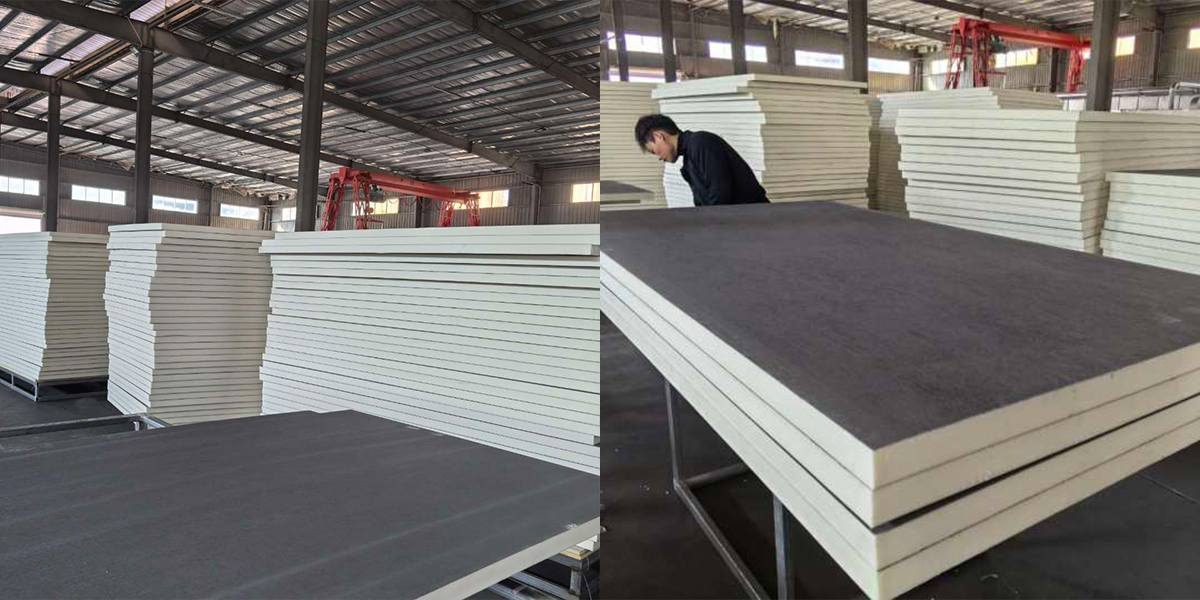
In many parts of Central and South America, PIR thermal insulation panels are widely used for HVAC ducting, roofing, and wall insulation. However, performance standards can vary significantly among local suppliers. Compared with mainstream PIR boards in the region, GFI Polyisocyanurate Insulation Boards offer distinct advantages:
- Higher Thermal Performance – With a thermal conductivity of ≤0.024 W/m·K, GFI rigid PIR foam insulation provide superior energy efficiency, often outperforming local products which typically range from 0.026–0.028 W/m·K.
- Enhanced Fire Safety – Certified to BS 476 Part 6&7 Class 0, GFI PIR thermal insulation panels meet strict flame spread and fire propagation requirements, offering improved safety for commercial and industrial projects.
- Better Dimensional Stability – Minimal deformation even under extreme temperatures (-30°C to 120°C) ensures long-term reliability in diverse climates, from tropical heat to cooler high-altitude regions.
- Lower Water Absorption – With <3% water absorption by volume, GFI Polyisocyanurate insulation boards are more resistant to moisture compared to many regional products that allow up to 5%.
- Consistent Quality Control – Manufactured with strict ASTM and BS compliance, ensuring every batch meets international standards, which is not always the case with smaller local producers.
| Property | GFI PIR Thermal Insulation Panels | Mainstream PIR Thermal Insulation Panels | Advantage |
|---|---|---|---|
| Standard Width | 600 / 1200 mm | 600 / 1200 mm (varies by supplier) | — |
| Thickness | 10–80 mm | 10–80 mm (commonly 20–50 mm) | Wider range for flexible applications |
| Foam Density | 30–50 kg/m³ | 28–45 kg/m³ | Higher density for improved strength |
| CFCs & HCFCs | Free | Often free, but not always tested | Verified environmental safety |
| Thermal Conductivity | ≤ 0.024 W/m·K | 0.026–0.028 W/m·K | Lower value = better insulation |
| Fire Rating | BS 476 Part 6&7 Class 0 | Class 1–2 (varies) | Higher fire safety rating |
| Compressive Strength | ≥ 0.15 MPa | ≥ 0.12 MPa | Greater load resistance |
| Tensile Bond Strength | ≥ 0.15 MPa | ≥ 0.12 MPa | Better structural adhesion |
| Water Absorption by Volume | < 3% | < 5% | Better moisture resistance |
| Dimensional Stability | 70°C 48h ≤ 1.5% -30°C 48h ≤ 1.0% |
Often higher deformation rates | Greater stability in extreme temperatures |
| Service Temperature | -30°C to 120°C | -20°C to 110°C | Wider operational range |
| Standards Compliance | ASTM, BS, DB34/T | Mostly local or regional standards | Consistent international quality |
Conclusion:
By combining exceptional insulation performance, high fire safety, and durability across a wide temperature range, GFI polyisocyanurate Insulation Boards provide a premium solution for Latin American markets, especially in large-scale HVAC, industrial, and commercial construction projects.
CONTACT US
Leave us a message and our team will get back to you soon.