
 Chinese
  Arabic
  English
  French
  German
  Portuguese
  Russian
  Spanish
  Thai
Thai  Vietnamese


在建造节能生产设施、仓库或住宅建筑时,选择合适的隔热材料至关重要。隔热板中使用的两种常见硬质隔热材料是 聚异氰脲酸酯(PIR)面板 和发泡聚苯乙烯 (EPS) 板。虽然它们看起来很相似,但它们具有不同的特性,使其适用于不同的应用。
技术
聚异氰脲酸酯(PIR):
PIR 板是一种由聚氨酯制成的防火隔热材料。在 PIR 隔热板中,金属板之间的空间在连续生产线上用聚异氰脲酸酯泡沫填充。与 EPS 芯板相比,此过程可形成均匀的隔热层,从而增强面板的强度和热性能。
发泡聚苯乙烯(EPS):
EPS 板是一种硬质隔热材料,由使用蒸汽将聚苯乙烯聚合物珠粒膨胀成泡沫制成。然后,这些珠粒被干燥、稳定并形成 EPS 块。对于 EPS 隔热板,膨胀聚苯乙烯被切成薄片并粘在金属饰面上,这可能会对板的强度和隔热特性产生负面影响。
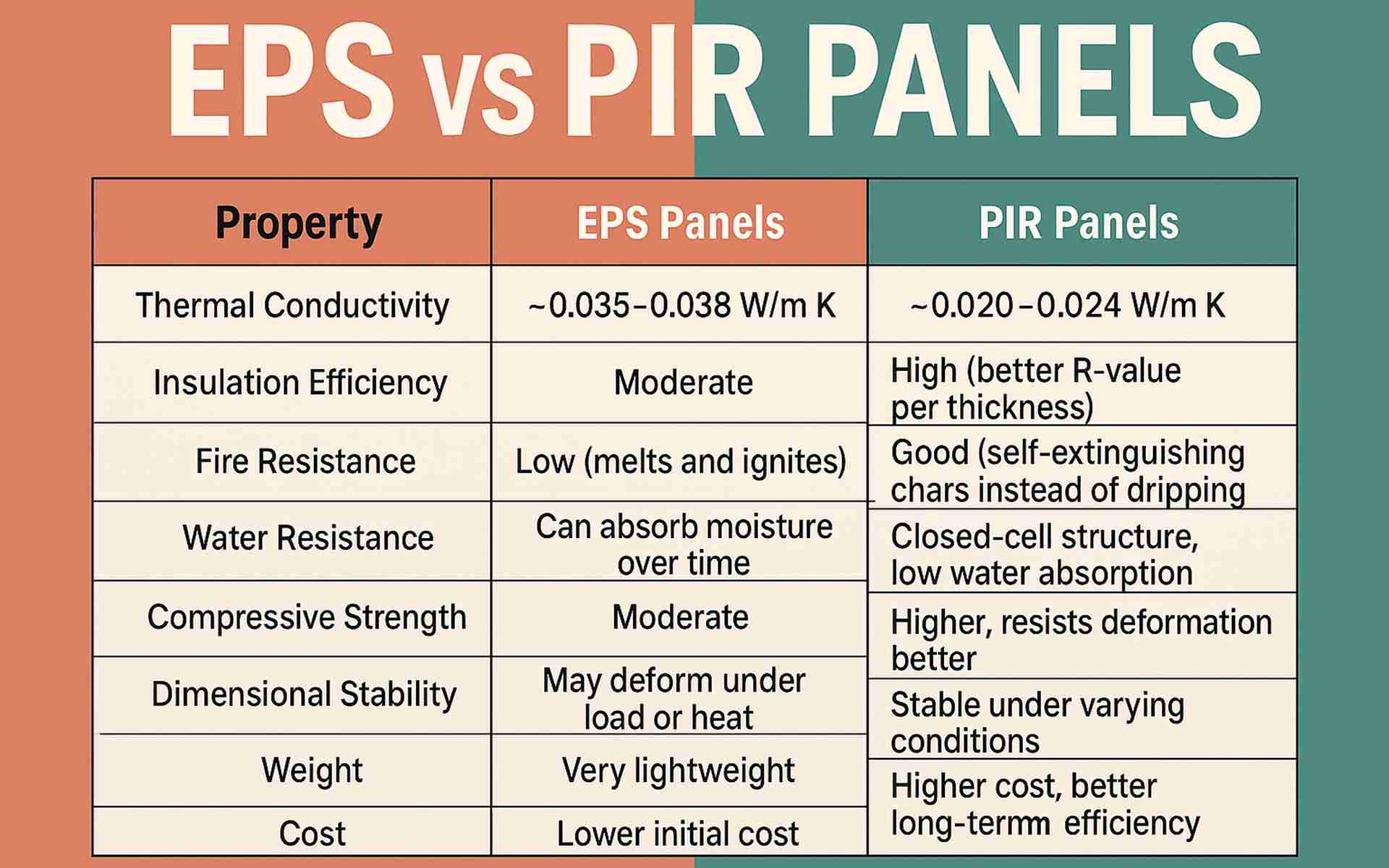
导热性
Energy efficiency is a key factor when selecting insulation. PIR panels have a thermal conductivity of 0.022 W/mK, which is lower than any other insulation material. In comparison, EPS has a thermal conductivity of around 0.036 W/mK. The lower the value, the better the insulation performance. Under the same conditions, PIR boards can save heat and cold by 60+% more efficiently than EPS boards, leading to significant savings on heating and cooling costs.
厚度
Due to its significantly lower thermal conductivity, a 70 mm thick PIR insulation panel can achieve the same thermal performance as a 120 mm thick EPS panel. In practical applications, this means PIR panels require much less thickness to deliver equal insulation efficiency.
As a result, they help save up to 50 mm of valuable usable space in walls, roofs, or duct systems. This thickness advantage not only improves design flexibility but also allows for slimmer constructions, greater interior space utilization, and reduced material weight, making PIR panels a smarter choice for modern energy-efficient buildings.

对火的反应
防火性是另一个关键因素。100 毫米厚的 PIR 夹层板在火灾中可以保持其承重能力和完整性 30 分钟。相比之下,EPS 板在 15 分钟后就会失去这些特性。

防潮性
PIR 和 EPS 均具有出色的防潮性,因为它们具有闭孔结构,可防止吸水。
抗啮齿类动物
PIR 是一种固体闭孔材料,结构坚硬,对啮齿动物没有吸引力。而 EPS 由融合在一起的球形珠粒组成,更柔软、密度更低,对啮齿动物更有吸引力。
如果您对 PIR 和 EPS 有更多疑问,我们的工程师随时准备为您提供帮助。通过电子邮件联系我们,我们将在当天回复。凭借超过 13 年的市场经验,我们知道如何选择合适的隔热材料来优化您的项目成本。
联系我们
请给我们留言,我们的团队会尽快回复您。.