
 Chinese
  Arabic
  English
  French
  German
  Portuguese
  Russian
  Spanish
  Thai
Thai  Vietnamese

PIR insulation board are widely used in residential, commercial, and industrial construction. Known for their low thermal conductivity, rigid foam structure, and lightweight design, PIR boards offer outstanding thermal insulation performance and long-lasting durability. These PIR material insulation panels are ideal for wall insulation, roof insulation, and floor insulation, and are especially effective in cavity wall applications. The closed-cell foam core helps maintain shape and insulation effectiveness over time without sagging or deterioration.

🧪 What Are PIR Insulation Boards Made Of?
PIR stands for polyisocyanurate, a high-performance thermoset plastic foam created by reacting polyols with isocyanates under high pressure and temperature. This process produces a rigid, heat-resistant core ideal for building insulation.
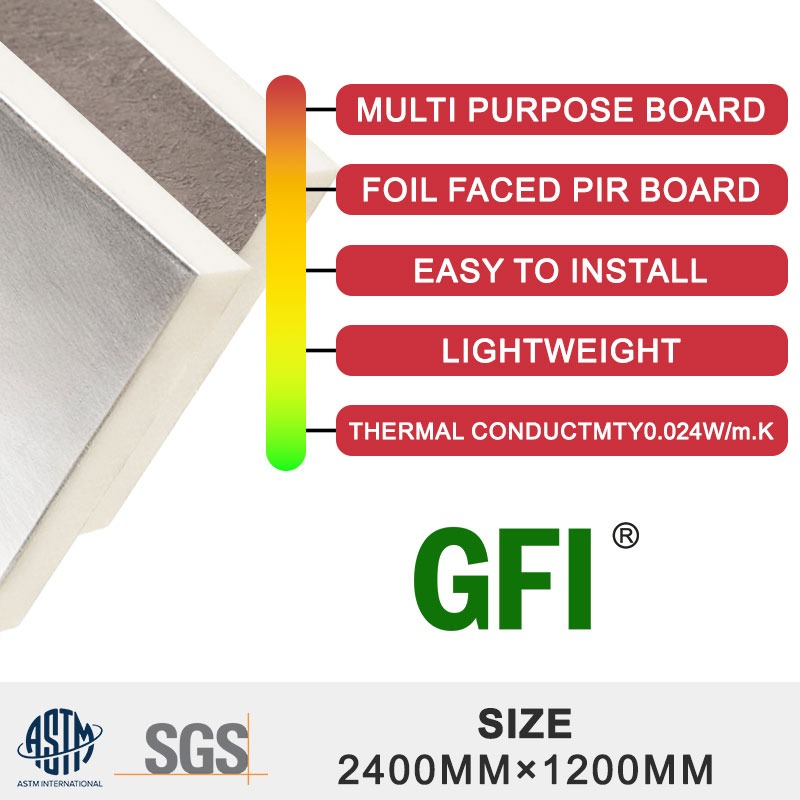
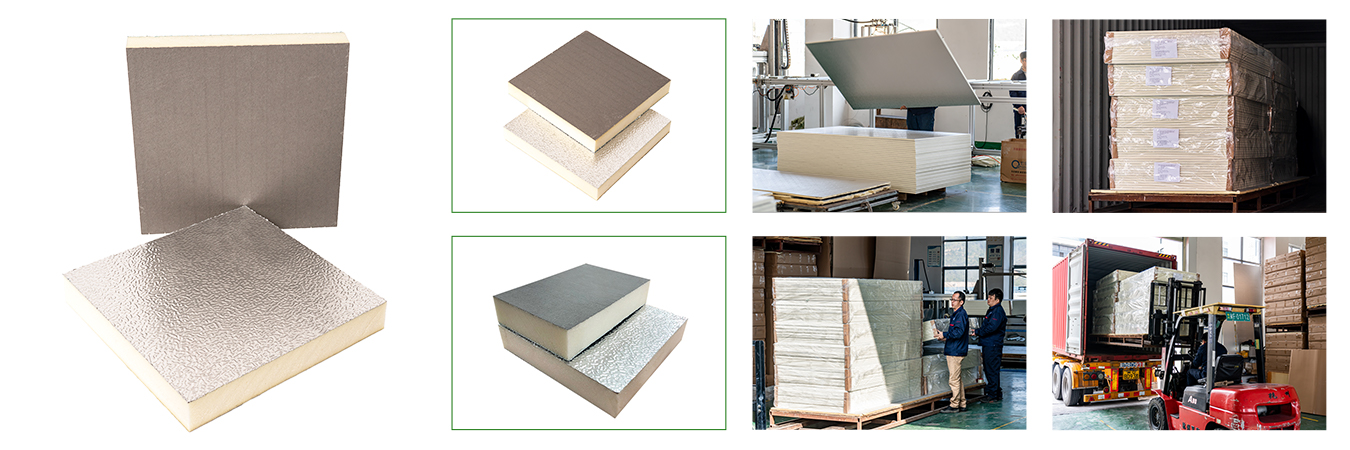
A typical PIR insulation board measures 2400mm × 1200mm, with thickness options ranging from 10mm to 80mm. Both sides of the foam core are laminated with a low-emissivity aluminum foil facing, which enhances thermal resistance and serves as a moisture barrier.
The foil layer reflects radiant heat back into the building and minimizes heat loss. When installed in a ceiling, for example, the foil helps retain warmth by reflecting heat downwards, thereby improving indoor comfort and energy efficiency.


✅ Advantages of PIR Material
Compared to other insulation materials such as EPS, XPS, or mineral wool, PIR insulation boards offer superior thermal performance, with a typical thermal conductivity as low as 0.022 W/m·K. This allows for thinner insulation layers to meet the same energy standards.
Key benefits of PIR material boards include:
- High compressive strength – suitable for load-bearing applications.
- Low water absorption – protects against moisture and mold.
- Excellent fire performance – PIR forms a char layer that slows fire spread.
- Dimensional stability – resists shrinkage and warping over time.
- Long-term thermal efficiency – retains insulation value over decades.
- These characteristics make PIR insulation panels a reliable and energy-efficient choice that complies with modern building codes.
🔧 Applications of PIR Foam Boards
Thanks to their strength, efficiency, and moisture resistance, PIR foam insulation boards are used across a wide range of construction scenarios:
🧱 Wall Insulation
Ideal for internal and external wall insulation, including cavity walls. They deliver excellent insulation values while being lightweight and easy to cut and install.
🏡 Floor Insulation
Commonly used in suspended floors and solid floor builds, PIR boards create a strong thermal layer that reduces energy loss and improves indoor comfort.
🏠 Roof Insulation
Used in both pitched and flat roof systems. The boards’ compressive strength and resistance to moisture make them well-suited for long-term performance in demanding rooftop environments.

❓ Frequently Asked Questions (FAQ)
1. 💧 Can PIR Insulation Boards Get Wet?
- While PIR insulation boards offer excellent water resistance, they are not completely waterproof. Improper installation or extended exposure to moisture without proper ventilation may reduce performance. To ensure longevity, always follow recommended installation practices.
2. ⏳ What Is the Lifespan of PIR Insulation?
- With correct installation and regular inspection, PIR foam insulation boards can last up to 50 years. They maintain their shape and insulation properties over time, making them one of the most reliable rigid foam insulation board options available.
3. ❄️ Can PIR Foam Board Be Used for HVAC Insulation?
- Absolutely. PIR foam board is an excellent choice for HVAC insulation due to its low thermal conductivity and high moisture resistance. It helps reduce heat loss through air ducts, improves overall energy efficiency, and supports stable long-term system performance.
4. 🔥 How Does PIR Board Compare to XPS or EPS Insulation?
- Compared to XPS and EPS, PIR board insulation delivers a higher R-value per inch, meaning better insulation with less thickness. PIR also offers improved fire resistance and superior heat performance, making it a premium choice for walls, roofs, and building envelopes.
5. 🧻 What Types of PIR Insulation Facing Are Available?
Most PIR insulation boards come with aluminum foil facing to boost thermal resistance and act as a vapor barrier. GFI offers:
- Aluminum Foil (standard low-emissivity)
- Fiberglass Tissue
- Aluminum Foil Paper
- Kraft Paper
- These facings provide additional protection and adaptability based on your project’s thermal and environmental demands.
📩 Ready to Upgrade Your Insulation?
Looking for a high-performance, energy-saving solution for your building project?
GFI’s PIR Insulation Boards offer the ideal balance of thermal performance, durability, and ease of installation. Whether for wall insulation, roof insulation, or HVAC systems, our rigid foam insulation boards are engineered to meet your needs.
👉 Contact GFI HVAC today at [email protected] for a product catalog, custom quote, or technical consultation. Let’s build smarter, more energy-efficient spaces—together.
联系我们
请给我们留言,我们的团队会尽快回复您。.