
 Chinese
  Arabic
  English
  French
  German
  Portuguese
  Russian
  Spanish
  Thai
Thai  Vietnamese


Application Value of Duct Systems from a System Design Perspective
In commercial complexes, hospitals, metro systems, office buildings, and large public facilities, underground spaces are often the most complex and problem-prone areas within HVAC systems.
Compared with above-ground environments, underground spaces typically feature high humidity, limited ventilation, and elevated condensation risk, making HVAC systems more susceptible to the following issues during operation:
- Condensation on duct surfaces
- Water dripping from ceilings
- Moisture absorption and insulation failure
- Mold growth and odor problems
As a result, HVAC design for underground spaces is fundamentally a system-level challenge of moisture control.
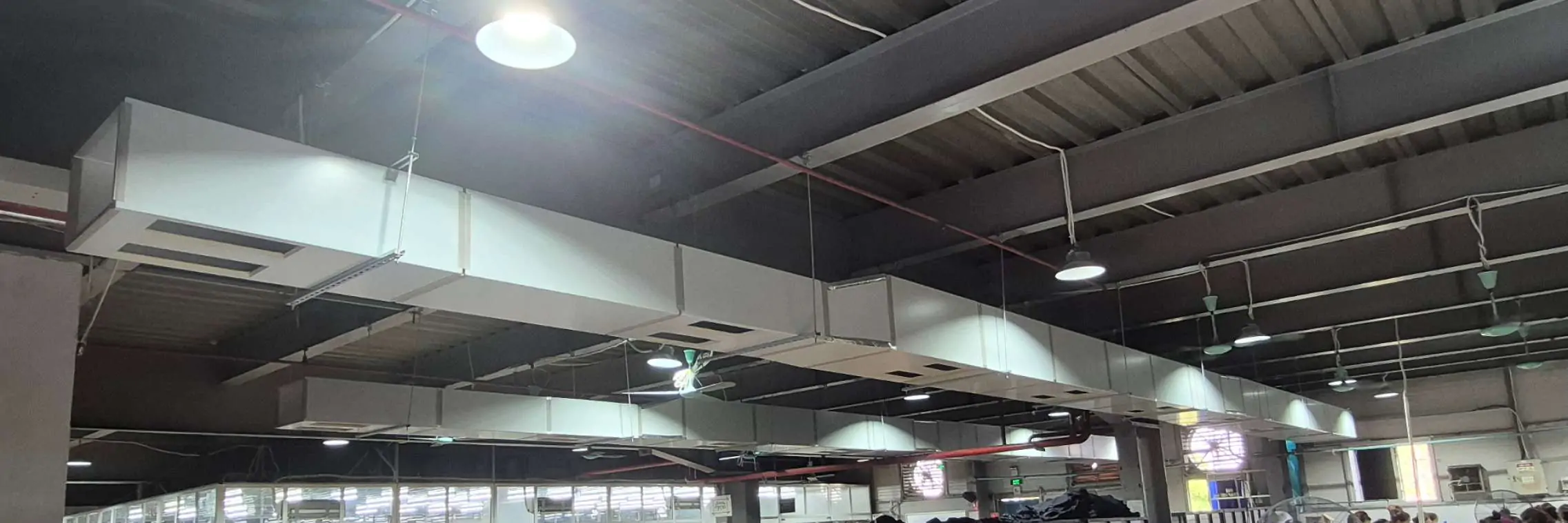
1. Why Are HVAC Moisture Problems More Common in Underground Spaces?
1.1 High Ambient Humidity Is the Norm
Underground environments usually exhibit several inherent characteristics:
- Relative humidity frequently near or above 70%
- Poor natural ventilation
- Easy ingress of outdoor humid air
When the surface temperature of chilled air ducts or chilled water pipes drops below the air dew point, condensation becomes almost unavoidable.
1.2 Condensation Effects Are Amplified Underground
Once condensation occurs, its impact is significantly greater than in above-ground spaces:
- Limited ceiling space restricts drainage options
- Condensate tends to accumulate
- Damp conditions accelerate mold growth
- Maintenance is costly and operational disruptions are severe
Therefore, preventing condensation is far more critical than managing it after it occurs.
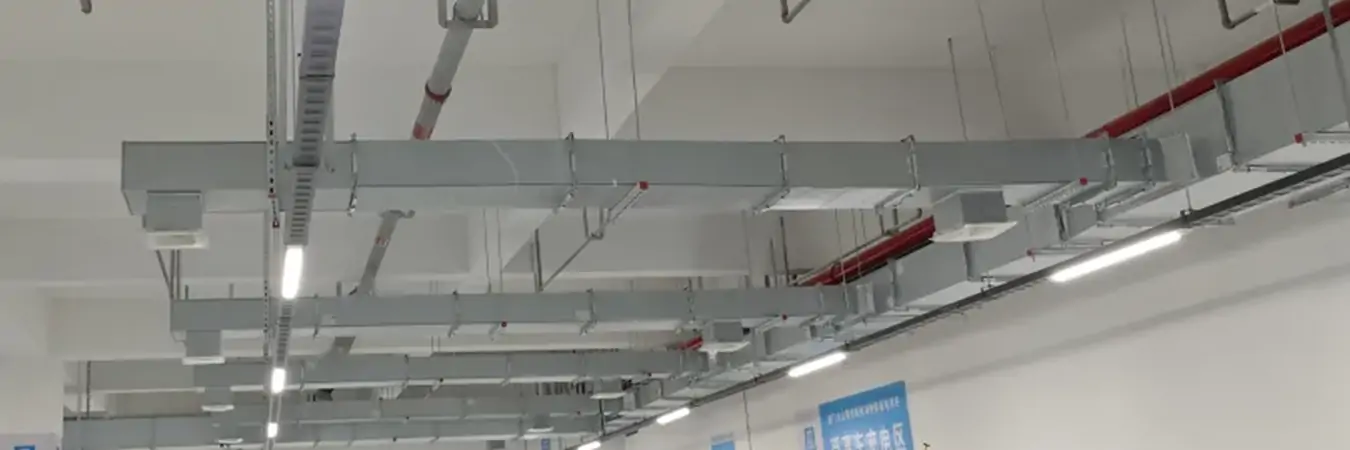
2. Limitations of Conventional Duct Systems in Underground Applications
Many underground HVAC projects still rely on traditional configurations, such as:
- Galvanized steel ducts
- External insulation with glass wool or rock wool
- Aluminum foil vapor barriers
In high-humidity environments, these systems often encounter recurring problems:
- Once the vapor barrier is damaged, insulation rapidly absorbs moisture
- Moisture-saturated fibrous materials experience a sharp increase in thermal conductivity
- Surface condensation reappears, creating a vicious cycle
- Long-term use leads to mold growth and fiber shedding
These issues are not primarily caused by poor workmanship, but by material structures that are inherently unsuitable for underground conditions.

3. Core Advantages of Pre-Insulated Ducts for Underground Moisture Control
3.1 Closed-Cell Structure Blocks Moisture at the Source
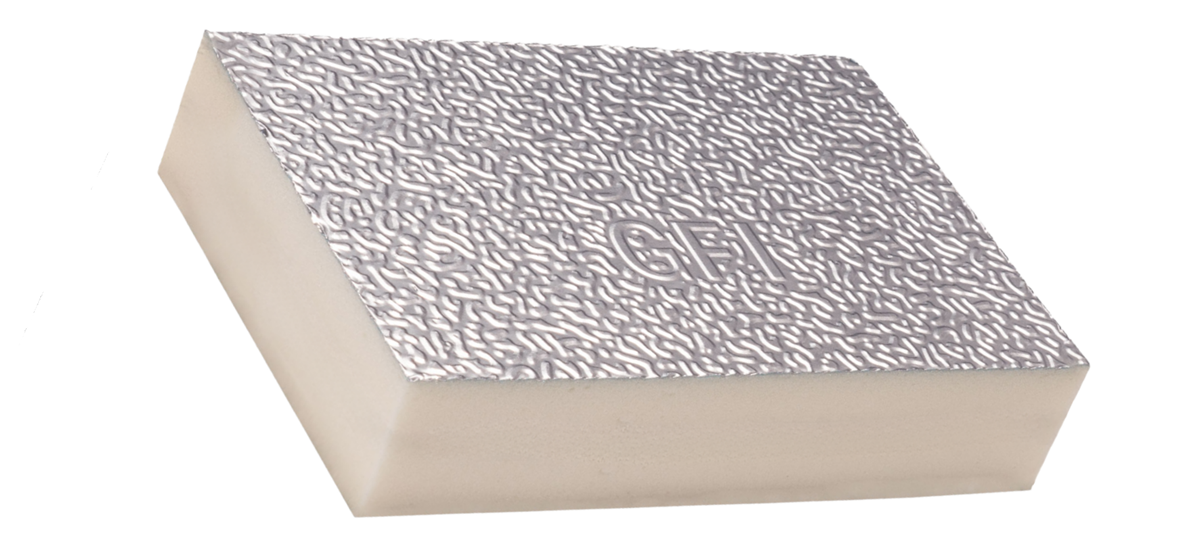
PIR and PU pre-insulated duct panels utilize a high closed-cell rigid foam structure:
- Each cell is independent
- Water vapor cannot migrate within the material
- Extremely low water absorption
Even in high-humidity environments, the duct body remains dry, ensuring stable thermal performance over time.
3.2 Aluminum Foil Facing Forms a Reliable Vapor Barrier
Pre-insulated duct systems are typically combined with:
- Single-sided or double-sided aluminum foil facings
- Systemized sealing tapes and joint treatments
This creates a continuous, vapor-resistant outer layer that effectively resists:
- Condensation
- Ambient moisture
- Air leakage
3.3 Integrated System Design Reduces Condensation Risk
Unlike conventional “duct + external insulation” assemblies, pre-insulated ducts are integrated systems:
- No secondary insulation layers
- Controlled and sealed joints
- Higher overall airtightness
In underground environments, system integrity often matters more than the performance of individual materials.
4. Typical Underground Applications
Pre-insulated duct systems perform particularly well in the following underground scenarios:
- Parking garage ventilation systems
- Commercial underground air-conditioning zones
- Hospital basement equipment floors
- Underground data centers
- Metro stations and transportation hubs
In these applications, pre-insulated ducts significantly reduce:
- Condensation-related complaints
- Maintenance frequency
- Moisture-induced system risks

结论
The key challenge of HVAC systems in underground spaces is not whether they can operate, but whether they can operate reliably over the long term.
With their closed-cell insulation structure, integrated system design, and dependable moisture resistance, pre-insulated duct systems are increasingly becoming the preferred solution for moisture control in underground HVAC applications.
联系我们
请给我们留言,我们的团队会尽快回复您。.