
 English
  Arabic
  Chinese
  French
  German
  Portuguese
  Russian
  Spanish
  Thai
Thai  Vietnamese


As building energy efficiency standards continue to rise and HVAC technologies evolve, traditional duct systems—typically made of galvanized steel ducts with external insulation—are gradually being replaced by newer solutions. Among them, lightweight duct systems using polyurethane (PU) or polyisocyanurate (PIR) insulation materials have emerged as an important development direction in modern air distribution engineering.
By integrating the structural layer and insulation layer into a single system, these innovative ducts significantly improve thermal performance while reducing overall weight and simplifying installation. As a result, they are increasingly used in commercial buildings, industrial facilities, and large public infrastructure projects.
1. Lightweight Design Is Becoming a Key Trend in Duct Systems
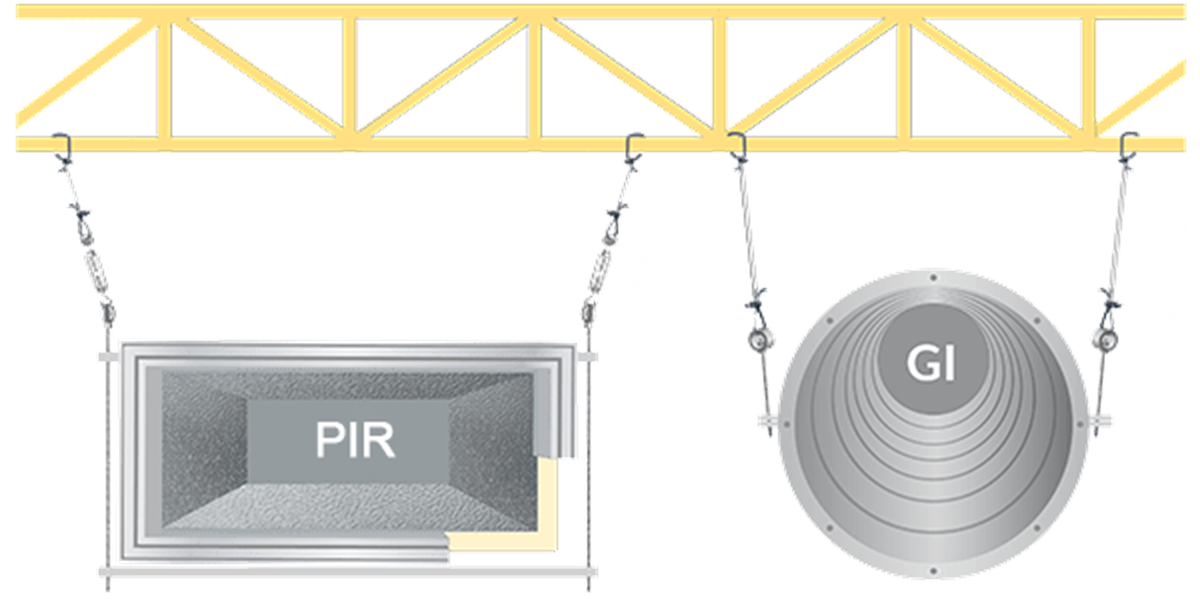
In modern building design, controlling the weight of mechanical systems has become increasingly important. Traditional metal duct systems often require additional insulation layers and numerous support brackets, resulting in relatively high overall system weight.
In contrast, lightweight ducts typically use a sandwich structure consisting of aluminum foil or metal facing combined with a polyurethane or PIR foam core. This structure maintains structural strength while significantly reducing weight.
Studies show that pre-insulated duct systems can reduce weight by up to 80% compared with traditional galvanized steel duct systems. This reduction helps lower structural loads on buildings and minimizes the number of required support structures.
Lightweight construction also makes transportation, handling, and installation more efficient on construction sites.
2. Integrated Insulation Improves System Energy Efficiency
Traditional duct systems often use a configuration of metal ducting combined with external insulation materials. In practice, this approach may lead to inconsistent insulation quality or discontinuities caused by on-site installation.
Lightweight duct systems, however, feature integrated insulation, where the insulation layer forms part of the duct structure itself. Polyurethane and PIR materials have very low thermal conductivity, which helps reduce heat gain or loss during air distribution.
Research indicates that high-performance pre-insulated duct systems can significantly reduce thermal transfer and energy consumption, allowing HVAC equipment to operate more efficiently.

3. Higher Airtightness and Better Airflow Efficiency
The airtightness of a duct system directly affects HVAC system efficiency. Excessive air leakage forces air conditioning equipment to consume more energy in order to maintain the required airflow and temperature levels.
Lightweight air ducts typically use specialized connectors and sealing systems, which help reduce air leakage and improve airflow delivery efficiency.
Improved airtightness not only reduces energy waste but also helps maintain stable airflow distribution and pressure balance throughout the HVAC system. This advantage is particularly valuable in large commercial buildings, data centers, and other facilities requiring stable environmental control.
4. Faster Installation and Modular Construction
With construction schedules becoming increasingly tight, installation efficiency has become a key factor in modern building projects.
Lightweight ducts are usually manufactured from pre-insulated duct panels that can be cut, folded, and bonded on-site to form duct sections quickly. This fabrication method reduces the need for complex sheet-metal processing and eliminates separate external insulation work.
In many projects, the installation speed of pre-insulated duct systems can be 30–50% faster than traditional metal duct systems.
This rapid installation capability makes them particularly suitable for large commercial developments and renovation projects.

5. Improved Hygiene and Environmental Performance
Modern buildings place increasing emphasis on Indoor Air Quality (IAQ). Traditional fiber insulation materials may experience issues such as fiber shedding or moisture absorption during long-term use.
Lightweight air duct systems generally use closed-cell foam insulation combined with aluminum foil inner surfaces, which helps minimize moisture absorption and inhibit the growth of mold or microorganisms. This contributes to maintaining a clean and hygienic air distribution system.
Additionally, these materials typically do not contain CFC or HCFC, making them more environmentally friendly and aligned with the development of green buildings.
6. Expanding Applications in Modern Buildings
As the technology continues to mature, lightweight air duct systems are now widely used across various building types, including:
- Commercial office buildings
- Large shopping centers
- Hospitals and cleanroom facilities
- Data centers and electronics factories
- Cold chain logistics and food processing facilities
In projects where energy efficiency, indoor air quality, and installation speed are critical, lightweight ducts are becoming an increasingly preferred HVAC solution.
Conclusion
Driven by the global push for energy-efficient and sustainable buildings, HVAC air distribution systems are also undergoing continuous improvement.
Lightweight duct systems based on polyurethane (PU) or polyisocyanurate (PIR) insulation offer several advantages, including reduced system weight, integrated thermal insulation, high airtightness, and faster installation. These benefits are enabling them to gradually replace certain traditional duct systems in modern construction projects.
As building energy standards continue to rise and construction technologies advance, lightweight pre-insulated duct systems are expected to play an increasingly important role in future HVAC air distribution systems.
CONTACT US
Leave us a message and our team will get back to you soon.