
 English
  Arabic
  Chinese
  French
  German
  Portuguese
  Russian
  Spanish
  Thai
Thai  Vietnamese


Choosing the Right Duct Insulation
In HVAC systems, duct insulation is essential for energy efficiency, condensation prevention, and acoustic comfort. Among the most common insulation options are rubber insulation wrap ducts and PIR foam ducts. While both provide thermal protection, their structural and material differences make them suitable for different project requirements.

Material Characteristics
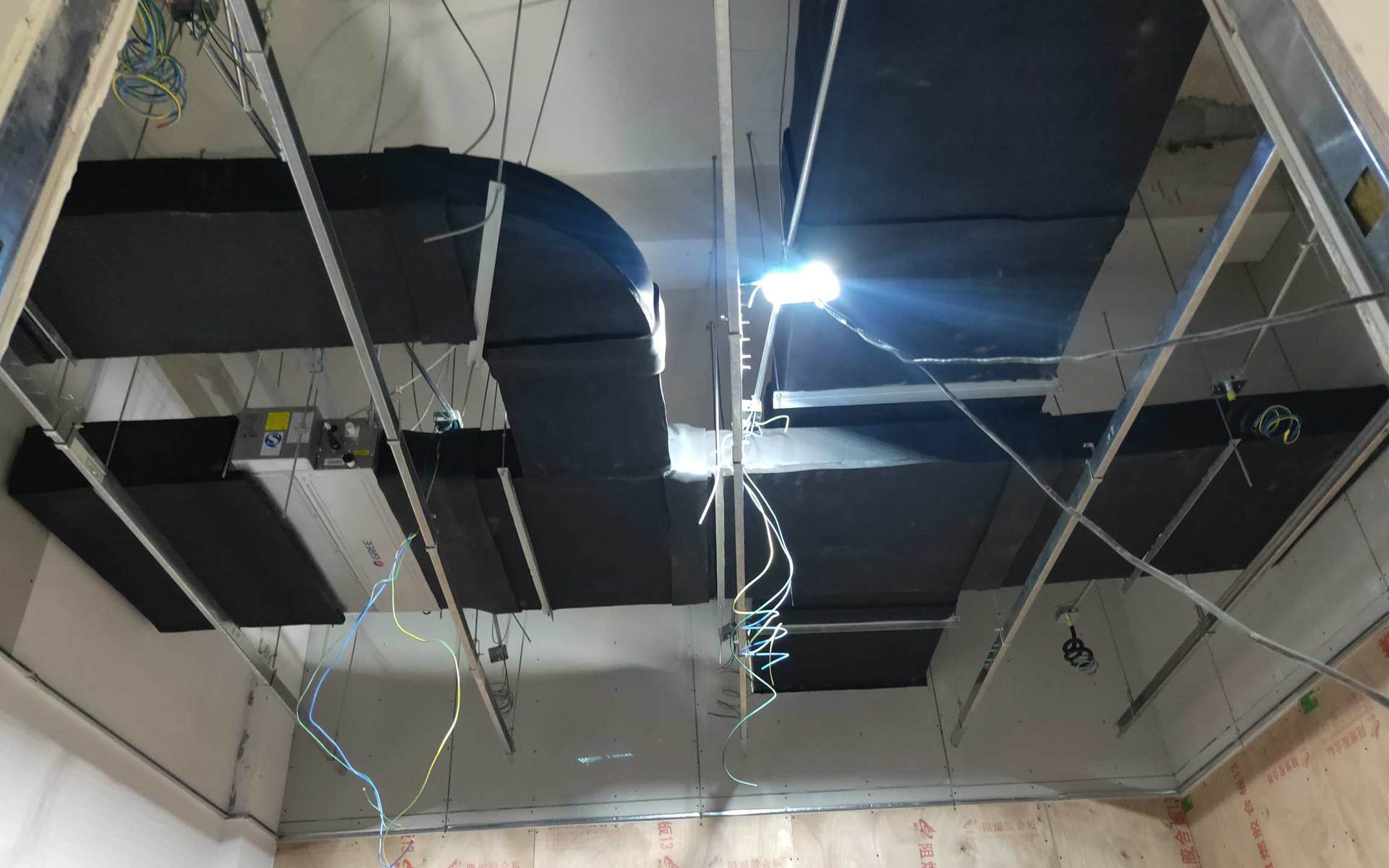
- Rubber Insulation Wrap Duct: Made from flexible NBR/EPDM elastomeric foam, rubber insulation is typically applied as a wrap around sheet metal ducts.
- PIR Foam Duct: Constructed from rigid polyisocyanurate (PIR) foam panels laminated with aluminum foil, acting as both duct and insulation in a single unit.

Performance Comparison
Thermal Performance
- Rubber Wrap: λ ≈ 0.034–0.038 W/m·K, suitable for chilled water and AC ducts.
- PIR Foam Duct: λ ≈ 0.022–0.024 W/m·K, ensuring higher energy efficiency.
Flexibility vs Structure
- Rubber Wrap: Highly flexible, fits around existing or irregular ducts.
- PIR Foam Duct: Rigid and stable, suitable for modular and lightweight duct systems.
Moisture & Condensation
- Rubber Wrap: Excellent closed-cell resistance against condensation and microbial growth.
- PIR Foam Duct: Moisture-resistant when joints are sealed properly.
Acoustic
- Rubber Wrap: Strong vibration and noise damping.
- PIR Foam Duct: Moderate sound attenuation.
Construction & Installation Comparison
Rubber Insulation Wrap Duct
- Process: Requires first fabricating and installing galvanized sheet metal ducts, then wrapping and sealing with rubber insulation sheets or rolls.
- Advantages: Flexible application, especially suitable for retrofits and irregular duct shapes.
- Challenges: More labor-intensive; insulation quality depends on workmanship and sealing accuracy.
PIR Foam Duct
- Process: Fabricated from PIR panels directly into duct sections (cutting, grooving, sealing) before installation. Duct and insulation are integrated.
- Advantages: Lightweight, faster installation, fewer steps since no additional insulation is required. Provides a clean, modern finish.
- Challenges: Less adaptable to irregular layouts, requires precise cutting and sealing during panel fabrication.

Comparative Table
| Aspect | Rubber Insulation Wrap Duct | PIR Foam Duct |
| Material | Flexible NBR/EPDM elastomeric foam wrap | Rigid PIR foam panel with aluminum facing |
| Thermal Conductivity | 0.034–0.038 W/m·K | 0.022–0.024 W/m·K |
| Flexibility | Fits irregular duct shapes, retrofit-friendly | Rigid, stable, ideal for modular systems |
| Moisture Resistance | Excellent (closed-cell structure) | Good (requires sealed joints) |
| Acoustic Performance | High vibration & noise absorption | Moderate attenuation |
| Construction | Step 1: Build GI duct → Step 2: Wrap & seal insulation | One-step fabrication with PIR panel duct |
| Installation Speed | Slower, labor-intensive | Faster, lightweight, integrated system |
| Best Applications | Retrofits, complex duct layouts, mechanical rooms | New builds, energy-efficient projects, hospitals, offices |
Conclusion
When selecting between rubber insulation wrap ducts and PIR foam ducts, the difference is not only in material performance, but also in construction method:
Rubber wrap ducts are flexible and versatile, best suited for retrofit projects, irregular ductwork, and areas with complex layouts, though they demand more labor during installation.
PIR foam ducts are lightweight, fast to install, and highly efficient, making them the preferred solution for modern, large-scale projects where speed, energy performance, and clean finish are priorities.

👉 For more details on specifications, installation methods, and project-based recommendations, contact us today for tailored duct insulation solutions.
CONTACT US
Leave us a message and our team will get back to you soon.