
 Russian
  Arabic
  Chinese
  English
  French
  German
  Portuguese
  Spanish
  Thai
Thai  Vietnamese

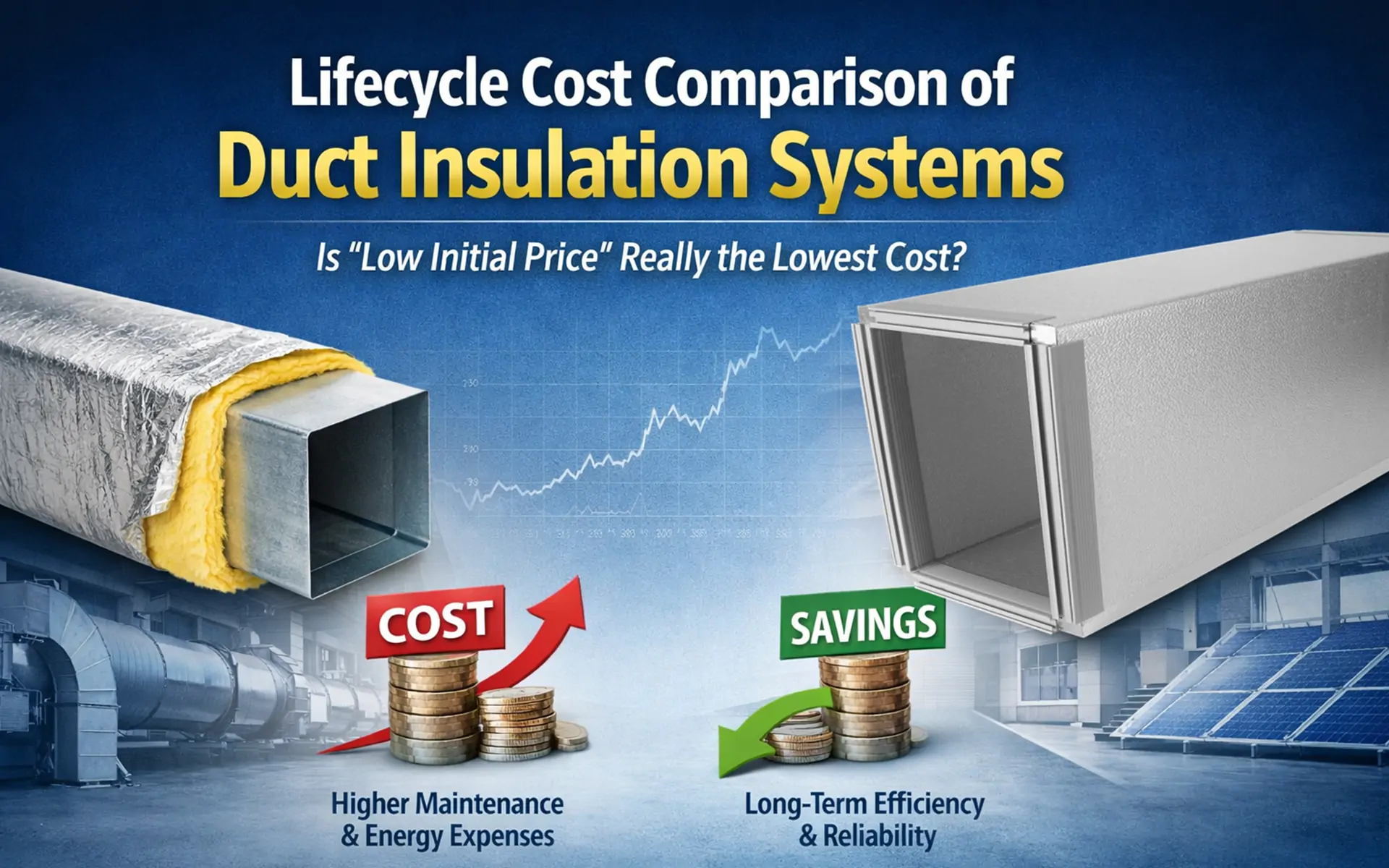
Why “Initial Price” Does Not Equal the True Cost
In HVAC engineering projects, duct insulation systems are often treated as a cost item rather than a value-driven system component. During the selection stage, many projects still rely primarily on material unit price or installation quotations, while overlooking a more critical question:
Over a 15–25 year service life, which duct insulation solution delivers the lowest total cost of ownership?
This is the core concept behind Lifecycle Cost Analysis (LCC).

1. What Is the Lifecycle Cost of a Duct Insulation System?
Lifecycle cost goes far beyond the initial material expense. It represents the total investment required throughout the system’s entire lifespan, including:
- Initial material cost
- Fabrication and installation cost
- Energy loss and operational energy consumption
- Maintenance and repair costs
- Risk of system failure and replacement
In HVAC systems operating under high humidity, heavy load, or long continuous running hours, these hidden costs often far exceed the initial price difference between insulation solutions.

2. Cost Characteristics of Traditional Externally Insulated Duct Systems
A conventional duct insulation system typically consists of:
- Galvanized steel ductwork
- Glass wool or rock wool insulation
- External aluminum foil or vapor barrier wrapping
Initial Advantages
- Lower upfront material cost
- High market familiarity
- Well-established construction practices
Lifecycle Cost Challenges
Over long-term operation, traditional externally insulated ducts commonly face the following issues:
- Vapor barrier damage leading to moisture absorption in insulation
- Significant increase in thermal conductivity over time
- Repeated condensation problems
- Insulation sagging, detachment, or mold growth
- Difficult maintenance and high rework costs
These issues directly result in:
- Gradual increase in energy consumption
- Reduced system efficiency
- Shortened service life of the duct system
3. Lifecycle Cost Performance of Pre-Insulated Duct Systems
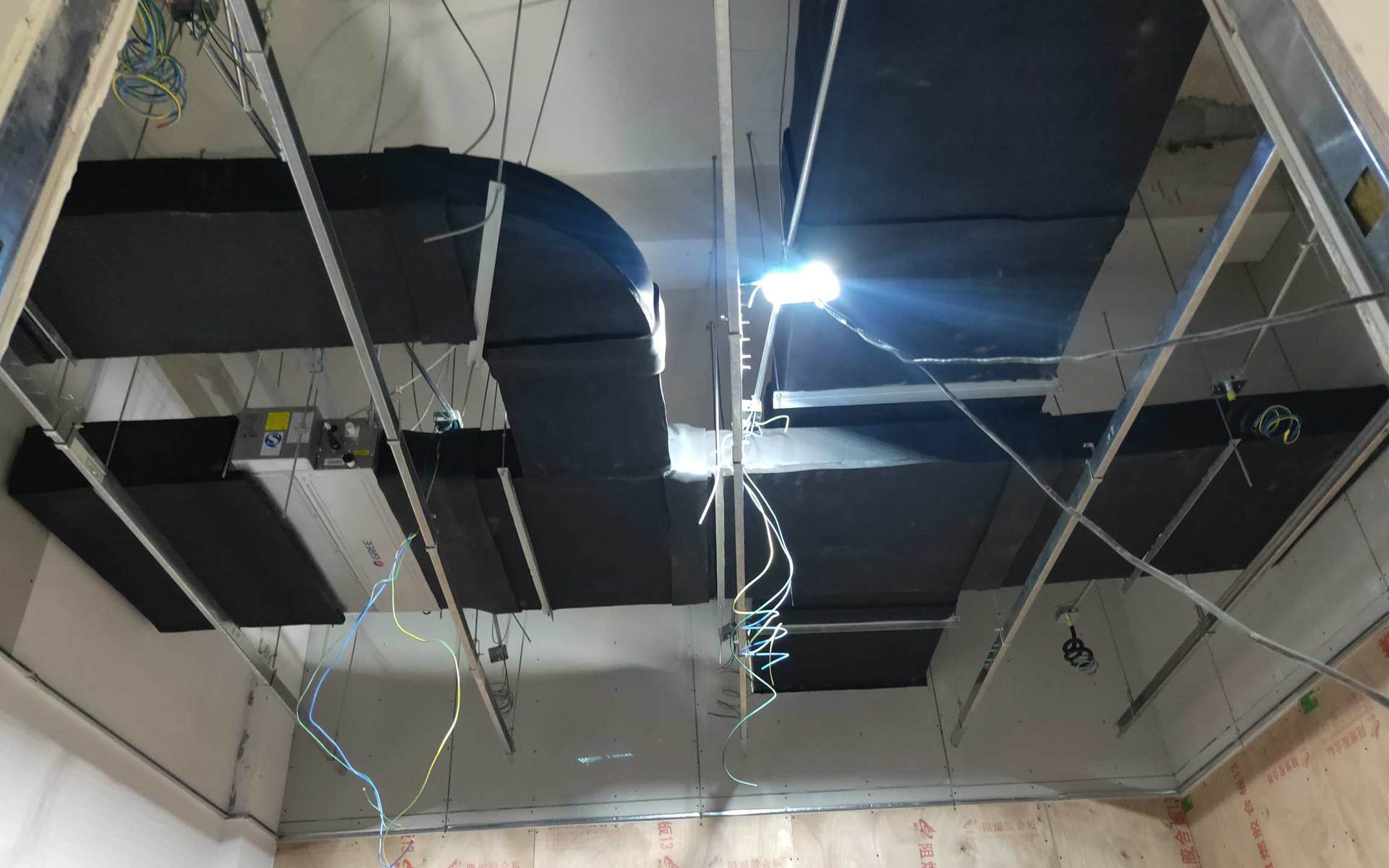
Pre-insulated duct systems use PU or PIR closed-cell rigid foam panels with aluminum foil facings, forming an integrated duct and insulation structure.
Initial Investment Characteristics
- Higher unit material cost compared to traditional insulation
- Different installation methodology requiring system-based fabrication
Long-Term Lifecycle Advantages
- During extended operation, pre-insulated ducts demonstrate clear benefits:
- Closed-cell structure with extremely low water absorption
- Stable thermal performance with minimal degradation over time
- Excellent condensation resistance
- No secondary external insulation layer, ensuring system integrity
- Low maintenance frequency and predictable servicing
When evaluated over a 15–25 year operating cycle, the total lifecycle cost of pre-insulated duct systems is often lower than that of traditional externally insulated ducts.

4. Cost Comparison Across Key Dimensions
| Cost Dimension | Traditional Externally Insulated Duct | Pre-Insulated Duct System |
|---|---|---|
| Initial Material Cost | Low | Medium |
| Installation Labor Cost | High | Lower |
| Moisture Protection | Highly dependent on workmanship | Structural vapor resistance |
| Thermal Performance Degradation | Significant over time | Minimal |
| Energy Consumption Stability | Increases over time | Long-term stability |
| Maintenance Frequency | Frequent | Very low |
| System Service Life | Умеренный | Long |
5. Why Lifecycle Cost Matters More in Modern HVAC Projects
Lifecycle cost considerations are especially critical in the following project types:
- Торговые комплексы
- Hospitals and healthcare facilities
- центры обработки данных
- Metro systems and transportation hubs
- Industrial facilities with continuous operation
These projects typically share the following characteristics:
- Long service life expectations
- High downtime and failure costs
- Complex maintenance conditions
In such environments, system reliability and long-term performance stability are far more valuable than short-term material cost savings.
Заключение
The true cost of a duct insulation system is not reflected on the procurement list—it is revealed through years of continuous operation.
From a lifecycle cost perspective, pre-insulated duct systems deliver long-term value through stable thermal performance, reliable moisture resistance, and significantly reduced maintenance requirements.
As a result, they are increasingly becoming a rational and performance-driven choice for modern HVAC projects worldwide.

CONTACT US
Оставьте нам сообщение, и наша команда свяжется с вами в ближайшее время.