
 Portuguese
  Arabic
  Chinese
  English
  French
  German
  Russian
  Spanish
  Thai
Thai  Vietnamese

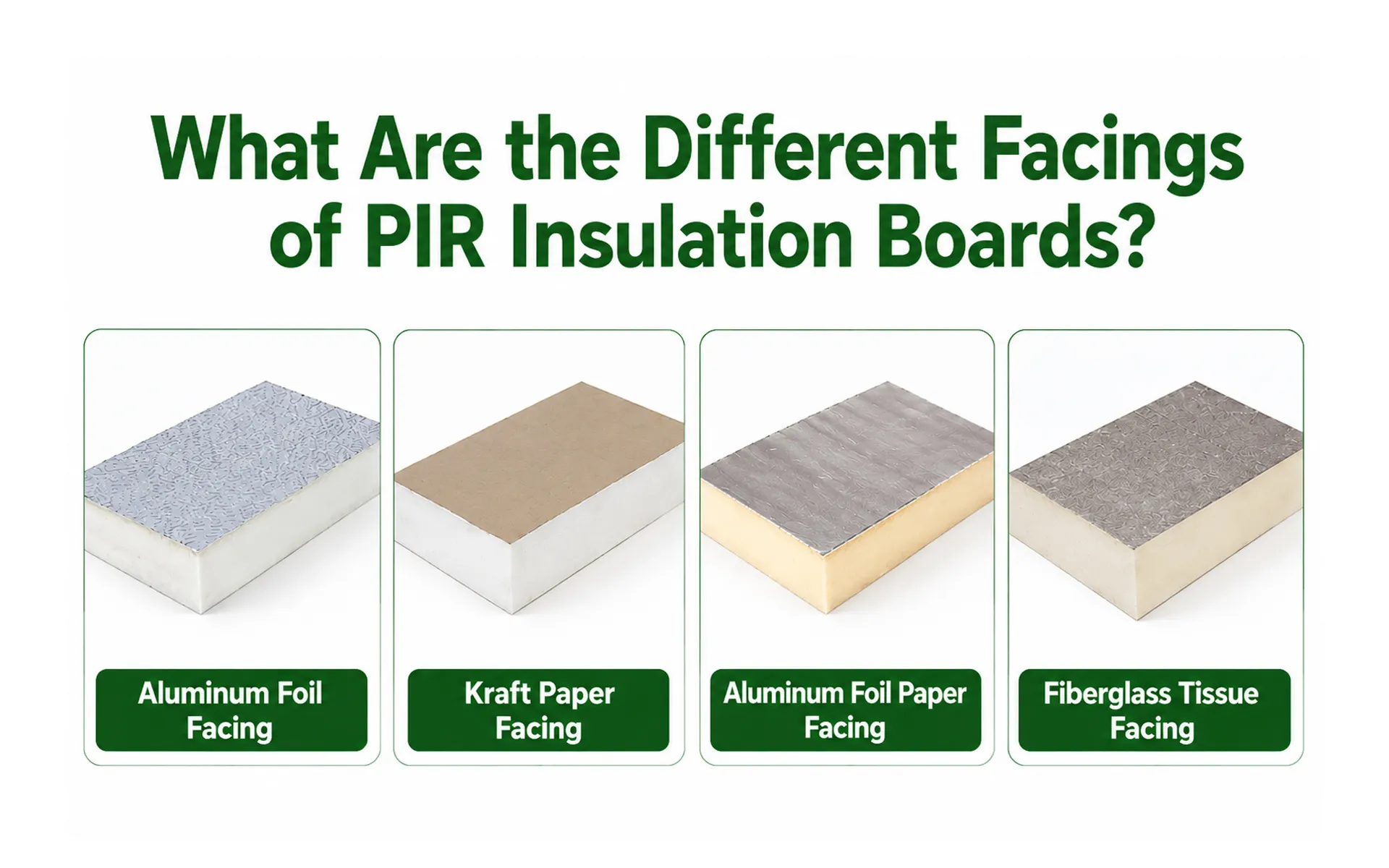
In modern building wall and roofing insulation systems, the performance of PIR insulation boards depends not only on the foam core itself, but also on the surface facing material, which plays a critical role in thermal insulation efficiency, moisture resistance, construction compatibility, and long-term durability. GFI PUR/PIR rigid foam insulation boards offer multiple facing options according to different project requirements, including fiberglass tissue, aluminum foil, aluminum foil kraft paper, and kraft paper, to meet various building application needs.
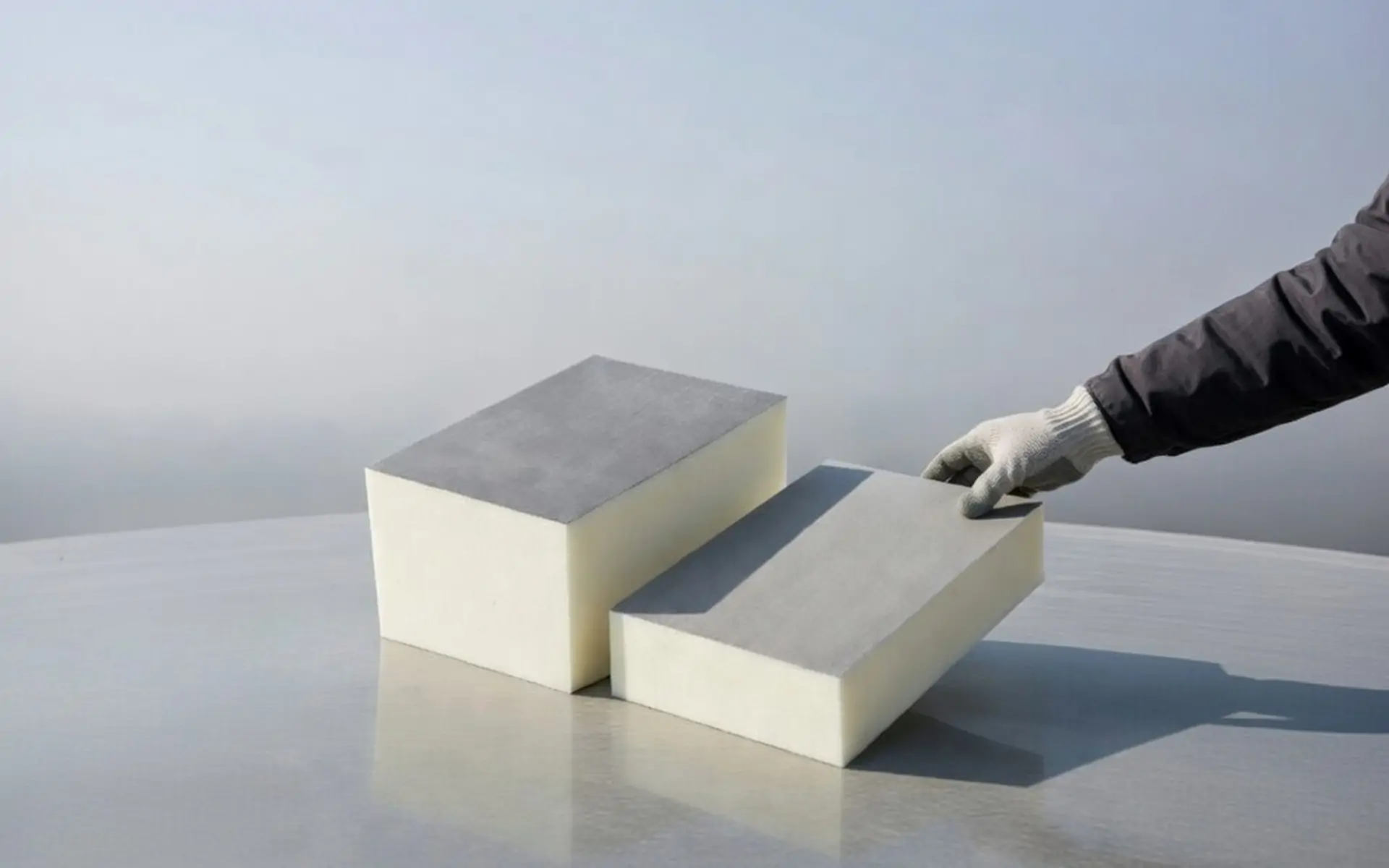
1. Aluminum Foil Faced PIR Insulation Board
Aluminum foil facing is one of the most widely used surface types for PIR rigid foam insulation boards.
This type typically consists of a composite structure combining a metal aluminum foil layer with a PIR foam core, offering the following advantages:
- Improves heat reflection performance
- Reduces radiant heat transfer
- Enhances moisture and water resistance
- Improves overall durability
Aluminum foil facing can also function as a vapor barrier, helping improve the overall thermal performance and stability of the building envelope.
2. Aluminum Foil Kraft Paper Faced PIR Insulation Board
Aluminum foil kraft paper facing is a composite structure that combines aluminum foil with a paper-based layer, offering a balance between strength and cost efficiency.
Key features include:
- Good moisture resistance and vapor control performance
- Smooth surface for easier installation
- More cost-effective compared to pure aluminum foil facing
- Suitable for general building insulation applications
This type is commonly used in projects where both cost control and performance are important.

3. Fiberglass Tissue Faced PIR Insulation Board
Fiberglass Tissue facing is a high-strength composite surface material with excellent structural durability.
Key features include:
- High surface strength and impact resistance
- Suitable for exterior wall and high-strength applications
- Good compatibility with mortar and insulation systems
This type is ideal for building envelope systems requiring high mechanical strength and installation stability.
4. Kraft Paper Faced PIR Insulation Board
Kraft paper facing is a more economical surface treatment option, mainly used for basic protection and secondary processing requirements.
Key features include:
- Lower material cost
- Easy to process and transport
- Suitable for secondary lamination applications
- Meets basic insulation requirements
This type is typically used in insulation systems with less demanding surface performance requirements.

5. Overall Function of Different Facings
Different facing materials in PIR insulation boards mainly serve the following functions:
- Improve moisture and vapor barrier performance
- Enhance structural stability of the board
- Improve installation adaptability
- Increase heat reflection and energy efficiency
- Meet diverse engineering application requirements
By selecting appropriate facing types, PIR insulation boards can be more precisely matched to different building envelope system designs.
Conclusão
GFI PIR insulation boards offer flexible facing combinations to meet the diverse needs of building wall and roofing insulation systems. From high-performance aluminum foil facing, to structurally reinforced cement glass fiber facing, and cost-efficient kraft paper options, these configurations together form a versatile insulation solution.
As modern construction continues to demand higher energy efficiency and system performance, PIR insulation board facing technologies will play an increasingly important role in building envelope applications.
CONTACTE
Deixe-nos uma mensagem e nossa equipe entrará em contato em breve.