
 Portuguese
  Arabic
  Chinese
  English
  French
  German
  Russian
  Spanish
  Thai
Thai  Vietnamese

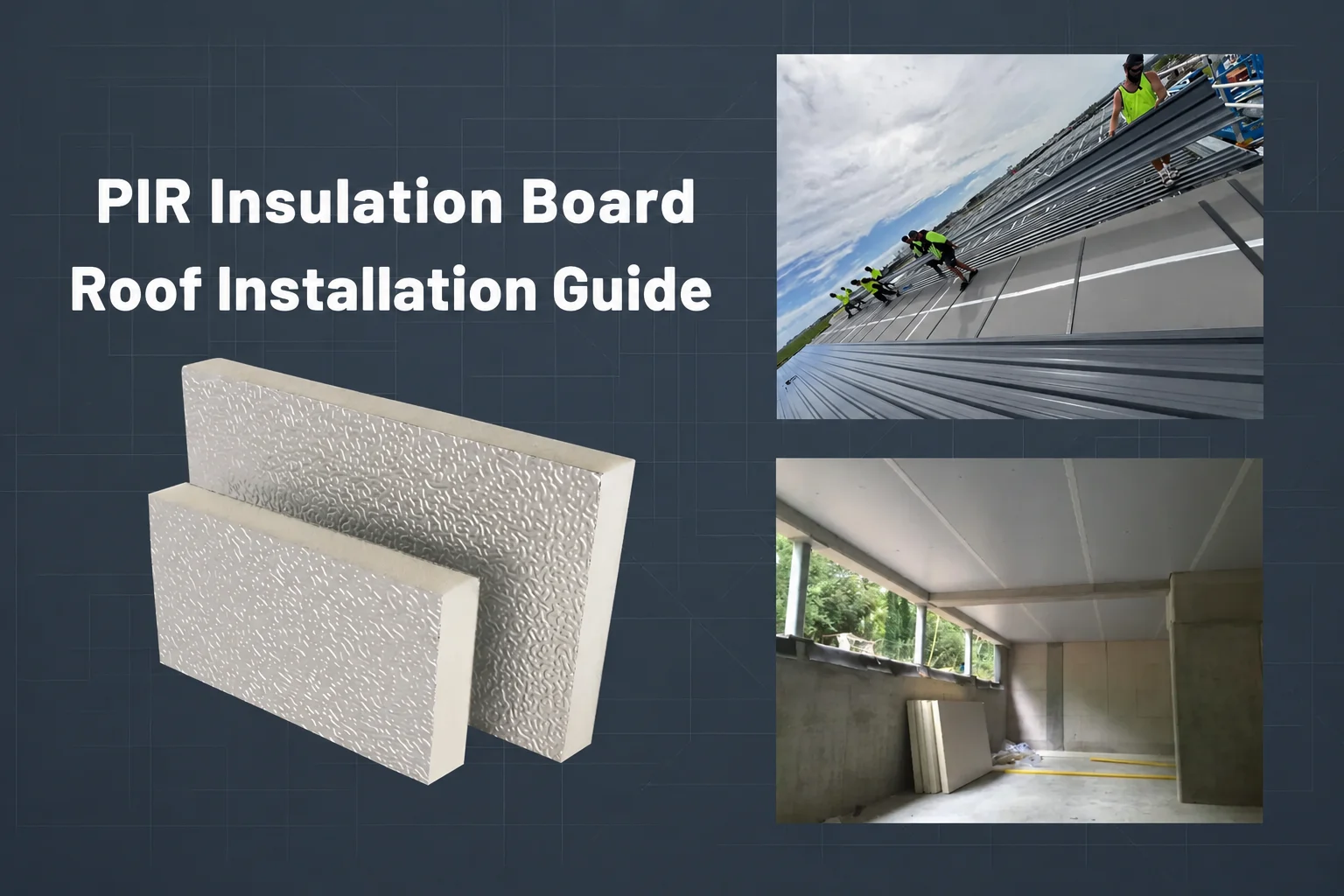
Placas de isolamento PIR are widely used in modern industrial facilities, warehouses, commercial buildings, and lightweight roofing systems due to their excellent thermal insulation performance, dimensional stability, high compressive strength, and fast installation efficiency. As an upgraded rigid polyurethane foam insulation material, PIR insulation board offers better fire performance and long-term stability than conventional PU/PIR foam insulation boards.
Compared with traditional EPS and mineral wool insulation systems, PIR boards provide lower thermal conductivity, superior moisture resistance, and shorter installation cycles, making them an ideal choice for new roofing projects and energy-efficient roof renovation. Below is the standard PIR Roof Insulation Board installation procedure compiled by GFI, suitable as a general reference for engineering and roofing insulation applications.

1. Roof System Structure (Typical Configuration)
A standard PIR roof insulation system generally consists of:
- PU/PIR Insulation Board: Closed-cell core with low thermal conductivity and excellent compressive strength and moisture resistance.
- Aluminum Foil / Fiberglass / Composite Facing: Acts as a vapor barrier and provides aging resistance.
- Fixing Battens (Plastic or Galvanized Steel): Installed along board joints to secure insulation panels in place.
- Self-Drilling Screws + Washers (Roofing Fasteners): Provide strong mechanical connection between insulation boards and purlins.
- Metal Roof Panels (Top Layer): Color steel sheets, aluminum-magnesium-manganese panels, or other corrugated metal roofing profiles.
Together, these components form a three-layer composite system: supporting structure + insulation layer + metal roof finish, offering high durability and long-term weather resistance.
2. PU/PIR Roof Insulation Installation Procedure
1) Roof Substrate Preparation
Before installing PU/PIR boards, ensure the roof structure meets construction requirements:
- Remove dust, debris, and oil stains
- Check purlin spacing and flatness
- Install vapor barrier or waterproof membrane if needed
A clean and stable substrate improves adhesion and system airtightness.
2) Insulation Board Placement (Core Step)
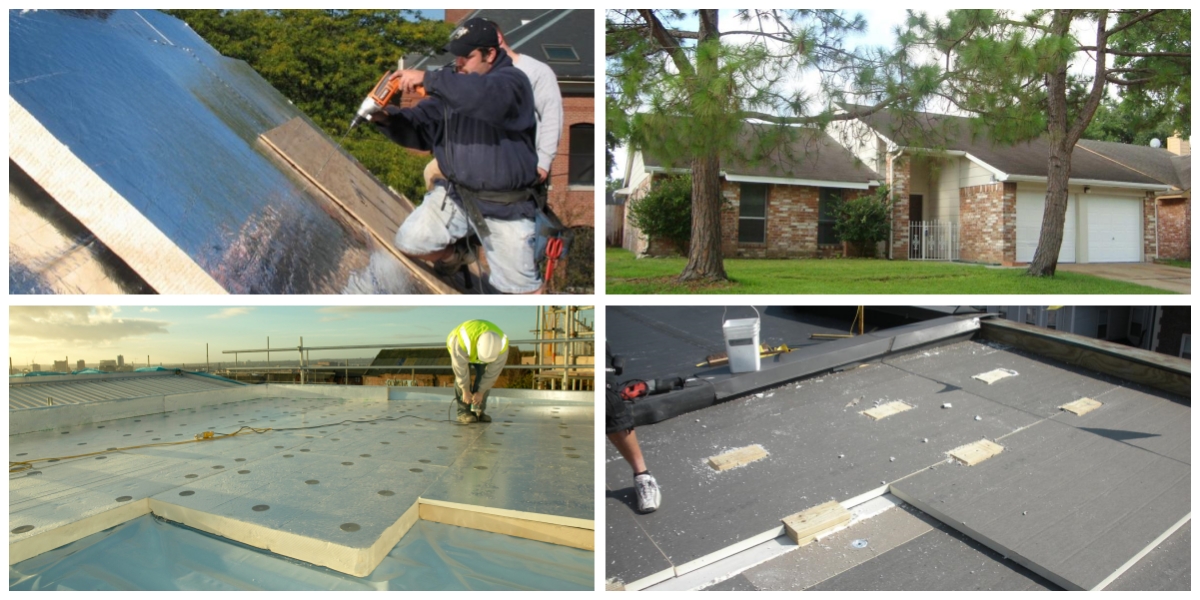
- Lay PU/PIR insulation boards flat on the roof structure or purlins
- Ensure tight board-to-board contact with no visible gaps
- Seal joints with aluminum foil tape to build a continuous vapor barrier
PU/PIR boards are lightweight and easy to cut, making them suitable for slopes and irregular roof geometries.
3) Installation of Fixing Battens
Place fixing battens along the joints of insulation boards and secure them with self-drilling roofing screws.
Functions of fixing battens:
- Prevent panel movement caused by wind uplift (wind resistance ↑ 50–70%)
- Improve overall roofing rigidity
- Serve as stable support lines for top metal panels
In engineering projects, Fixing Battens + Self-Drilling Screws are the most critical mechanical anchoring method for PU roof systems.
4) Installation of Metal Roof Panels
Common materials:
- Color coated steel sheet
- Trapezoidal/corrugated steel panels
- Aluminum-magnesium-manganese roof panels
Metal panels are fastened through the purlins, providing downward compression that firmly secures the PU/PIR insulation layer.
5) Edge Flashing & Penetration Sealing
Seal all sensitive areas, including:
- Eaves, parapet edges, and end laps
- Pipe penetrations, chimneys, and fan bases
- Roof joints and transitions
Waterproof sealing is essential because prolonged water exposure can reduce PU/PIR insulation performance.


3. Benefits of PU/PIR Roof Insulation Systems
1) Superior Thermal Performance
- Thermal conductivity ≤ 0.024 W/m·K.
- Greatly reduces cooling/heating loads and improves building energy efficiency.
2) Fast Installation & Reduced Construction Time
- No wet work required
- Easy cutting and handling
- Up to 50% faster than traditional insulation systems
3) Lightweight & Low Structural Load
Reduces load on steel structures—ideal for old building roof renovations.
4) High Compressive Strength & Long-Term Stability
Suitable for walkable maintenance areas. Does not sag, collapse, or shrink over time.

4. Conclusion
GFI’s PU/PIR roof insulation system provides:
- High-performance thermal insulation
- Fast, lightweight, and durable installation solutions
- Compatibility with both new projects and roof renovation works
GFI PU/PIR boards are widely used in:
- Industrial factory roof upgrades
- Commercial building roof insulation
- Warehouses and logistics centers
- Steel roof systems across various industries

Enhance Your Roof Energy Efficiency with GFI PU/PIR Insulation Boards
GFI supplies PU/PIR insulation boards in multiple facing and thickness. Contact GFI HVAC for complete insulation solutions.
| Imóveis | Padrão | Especificação |
| Largura padrão | 600/1200mm | |
| Espessura | 10-80mm | |
| Densidade da espuma | ASTM D1622/D1622M-14 | 30-50kg/m³ |
| CFC e HCFC | Espaço de cabeça GC/MS | Grátis |
| Condutividade térmica | ASTM C518-17 | <=0,024W/m.K |
| Classificação de fogo | BS 476 Parte 6&7 | Classe 0 |
| Resistência à compressão | ASTM D1621-16 | >=0,15Mpa |
| Resistência à tração da ligação | DB34/T 3826-2021 | >=0,15Mpa |
| Absorção de água por volume | ASTM C209-15 | <3% |
| Estabilidade dimensional |
70ºC 48h<=1.5% -30ºC 48h<=1,0% |
|
| Temperatura de serviço | DB34/T 3826-2021 | -30ºC - 120ºC |
Contact GFI today for samples, technical specifications, and project quotations.
CONTACTE
Deixe-nos uma mensagem e nossa equipe entrará em contato em breve.