
 English
  Arabic
  Chinese
  French
  German
  Portuguese
  Russian
  Spanish
  Thai
Thai  Vietnamese


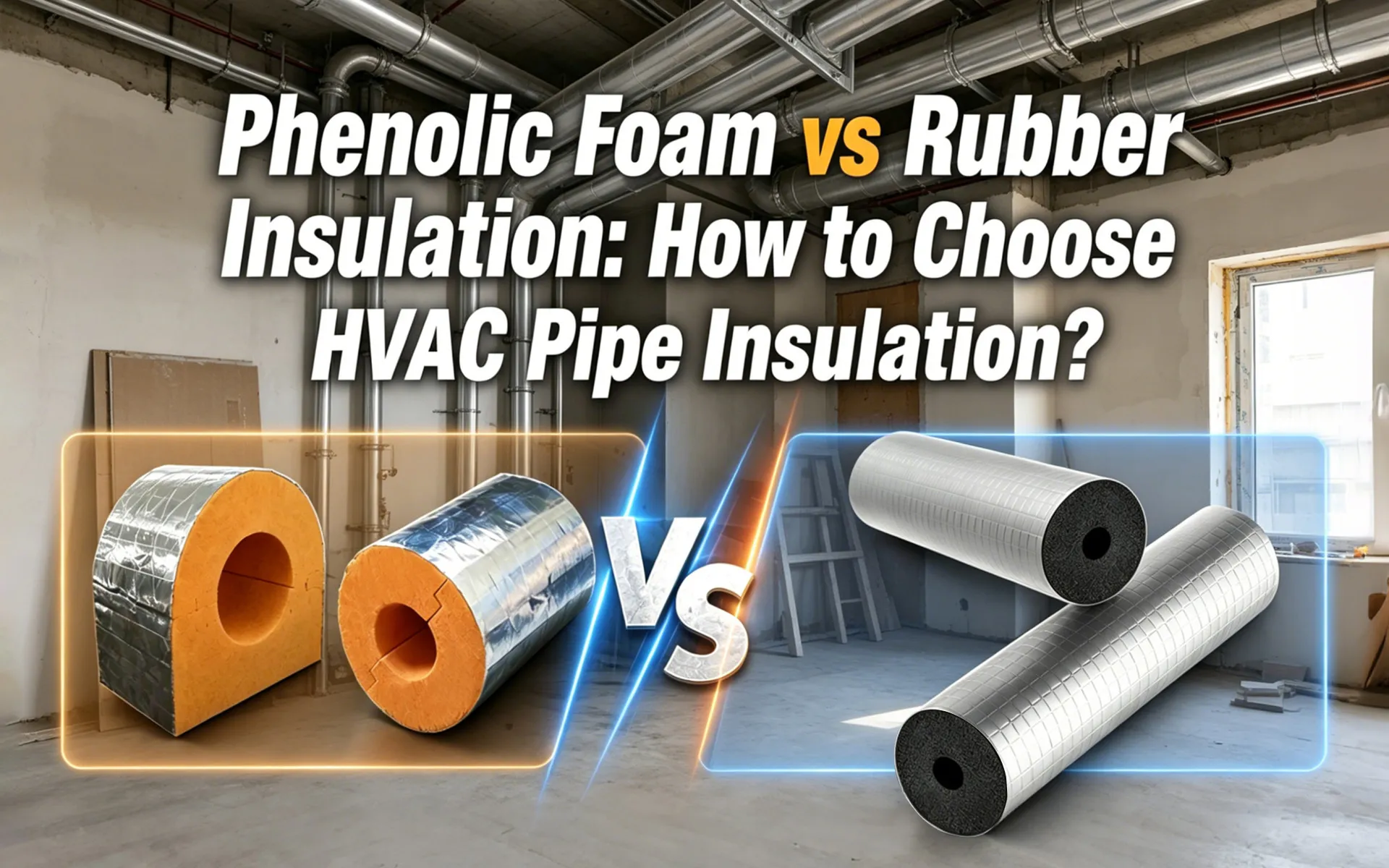
In modern building HVAC systems, the selection of pipe insulation materials directly affects system energy efficiency, condensation control performance, and long-term operational stability. Currently, two widely used materials are Phenolic Foam Pipe Insulation and Rubber Insulation. Each has different structural characteristics and engineering applications, making them suitable for different project requirements.
1. Material Structure and Basic Properties Comparison
Phenolic foam Insulation is a rigid insulation material with a closed-cell structure. It features low thermal conductivity and good dimensional stability. phenolic insulation uniform cellular structure effectively reduces heat transfer and also provides good fire resistance.
Rubber insulation is typically made from flexible elastomeric foam. It is also a closed-cell material with good flexibility and installation adaptability, making it suitable for complex piping systems.
2. Thermal Conductivity and Energy Efficiency
In HVAC systems, thermal conductivity is a key parameter for evaluating insulation performance. According to material performance data, Phenolic Foam typically has a thermal conductivity as low as 0.022 W/m·K, demonstrating superior thermal resistance, which helps further reduce heat loss and improve overall system energy efficiency.
In comparison, NBR rubber insulation generally has a thermal conductivity of around 0.030–0.037 W/m·K. Although it also provides good thermal insulation and condensation resistance, its heat loss control performance is relatively lower under long-term low-temperature operating conditions.
Therefore, in HVAC projects with higher requirements for energy efficiency, long-term energy savings, and thermal stability, Phenolic Foam is generally the more advantageous choice.
3. Condensation Resistance Performance
Condensation is a common issue in chilled water and air-conditioning systems, especially in high-humidity environments.
- Phenolic foam, due to its high closed-cell structure, effectively blocks moisture penetration and reduces condensation risk
- Rubber insulation also provides moisture resistance, but long-term performance at joints and edges may degrade under humid conditions
Therefore, phenolic foam offers better stability in high-humidity or large temperature-difference environments.
4. Fire Safety Performance
Fire safety is a critical consideration in commercial buildings and public facilities.
- Phenolic foam board typically offers better fire performance with lower smoke density during combustion
- Rubber insulation varies by grade; some high-grade products meet requirements, but overall performance differs
Phenolic foam is more commonly preferred in projects with strict fire safety regulations.
5. Installation Convenience and Adaptability
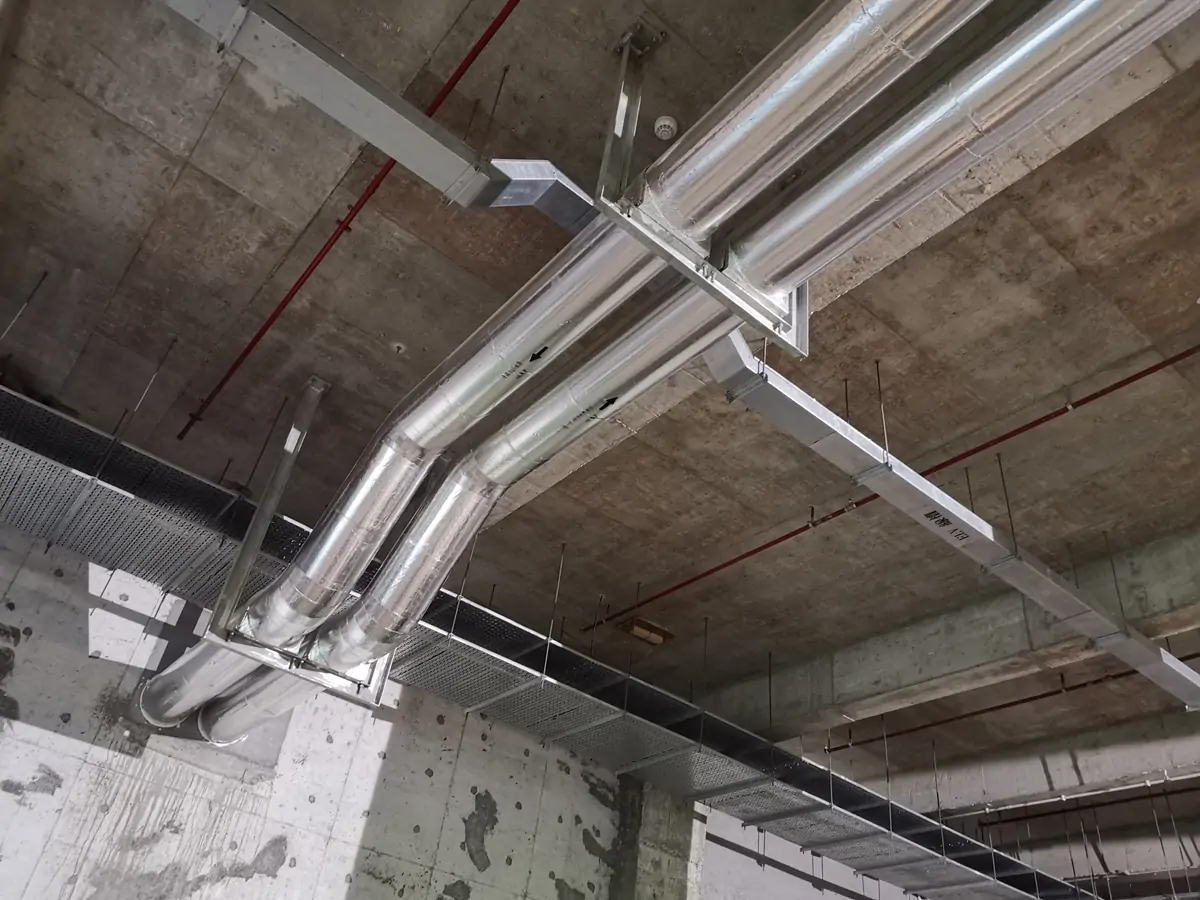
- Rubber insulation is flexible and easy to bend, suitable for complex piping layouts and faster installation
- Phenolic foam is more rigid or semi-rigid, making it more suitable for standardized piping systems and prefabricated installation
Therefore, rubber insulation has advantages in complex construction conditions.
6. Service Life and Long-Term Stability
Long-term operational stability directly affects maintenance costs and system reliability.
- Phenolic foam has stable structure and low deformation risk, with minimal performance degradation over time
- Rubber insulation may experience aging or performance decline under long-term heat, UV exposure, or mechanical stress
Phenolic foam performs better in long-term stable HVAC operations.
7. How to Choose the Right Insulation Material?
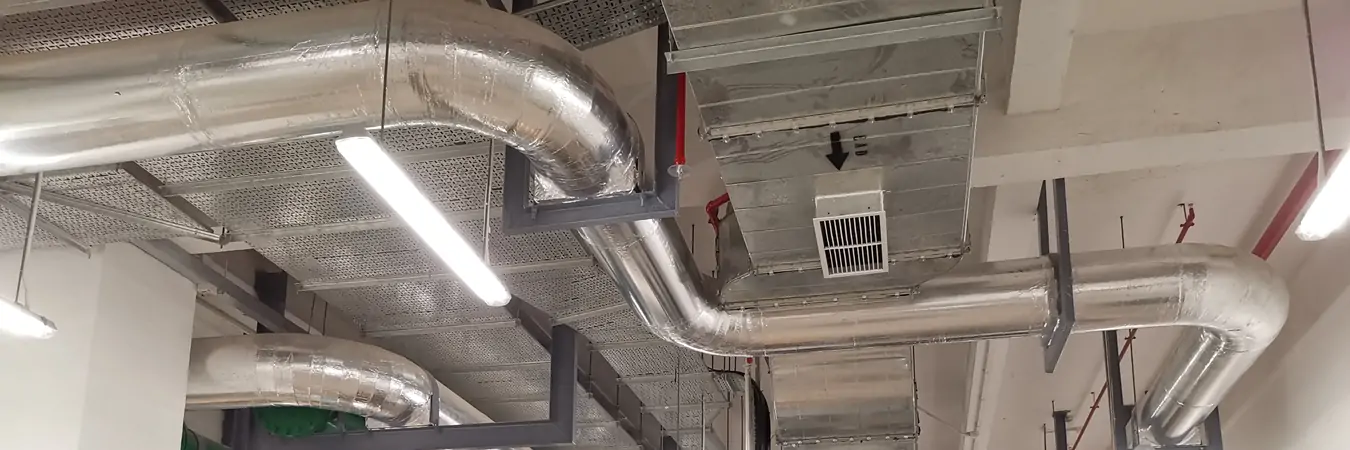
In practical HVAC engineering, the selection of insulation materials should be based on multiple factors, including environmental conditions, fire safety requirements, energy efficiency goals, and installation constraints, rather than a single criterion.
Generally, Phenolic Foam is more suitable for projects that prioritize long-term energy efficiency, structural stability, and higher fire safety performance. In contrast, Rubber Insulation is more adaptable in applications with complex piping layouts, limited installation space, or where installation convenience is a key consideration.
8. Insulation Material Selection Needs Stable Supply Support
In practical HVAC projects, besides focusing on the thermal conductivity, fire resistance, and anti-condensation performance of insulation materials, product quality and stable delivery capability are also equally important.
As a manufacturer specializing in HVAC pre-insulated duct systems and insulation solutions, GFI Duct has been deeply engaged in the PIR/PU/Phenolic pre-insulated duct panel and insulation material industry since 2011. Its products have been widely applied in commercial buildings, industrial ventilation, and air conditioning projects worldwide.
GFI has established a comprehensive production system and R&D capability for pre-insulated duct panels. The factory is certified under the ISO 9001:2015 quality management system and equipped with standardized production lines and a professional R&D team. In addition, GFI cooperates with universities on technical research and development, continuously improving the energy efficiency, fire performance, and long-term stability of insulation materials.
With years of product expertise and international project experience, GFI continues to provide global customers with more energy-efficient, reliable, and high-performance HVAC insulation and ducting solutions.
Conclusion
Phenolic Foam Pipe Insulation and Rubber Insulation each have their own advantages, and neither is absolutely superior. In HVAC pipe insulation system design, selection should be based on environmental conditions, energy efficiency goals, and fire safety requirements.
With increasing building energy efficiency standards, Phenolic Foam Pipe Insulation is being more widely adopted in high-performance HVAC systems and has become an important choice for demanding engineering applications.
CONTACT US
Leave us a message and our team will get back to you soon.