
 French
  Arabic
  Chinese
  English
  German
  Portuguese
  Russian
  Spanish
  Thai
Thai  Vietnamese

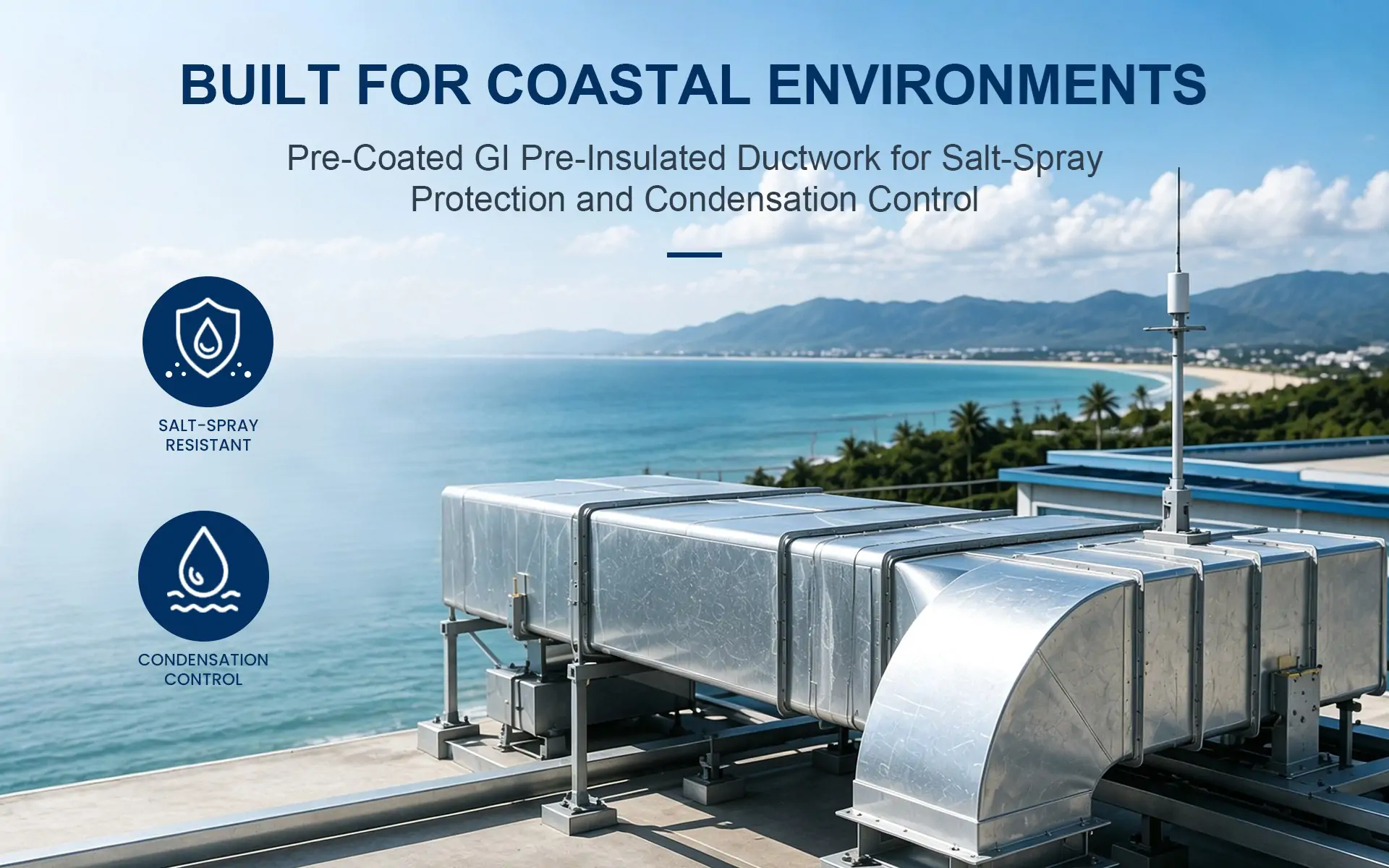
Outdoor and semi-outdoor ventilation systems in coastal and tropical high-humidity regions continuously face harsh environmental conditions. Including salt-laden air, high relative humidity, and significant day-to-night temperature fluctuations.When contractors use conventional PIR/PUR pre-insulated duct systems in coastal outdoor or semi-exposed applications. Standard aluminum foil facings may not provide adequate protection against prolonged salt-spray exposure. Even minor cuts or surface defects can allow salt-laden moisture to penetrate the system, potentially causing moisture absorption in the insulation core and corrosion of metal components.
The pre-coated GI pre-insulated ductwork solution for salt-spray resistance and condensation control combines optimized substrates, protective facings, corrosion-resistant sealing components, and proper installation practices to protect ductwork in high-salinity and high-humidity environments.
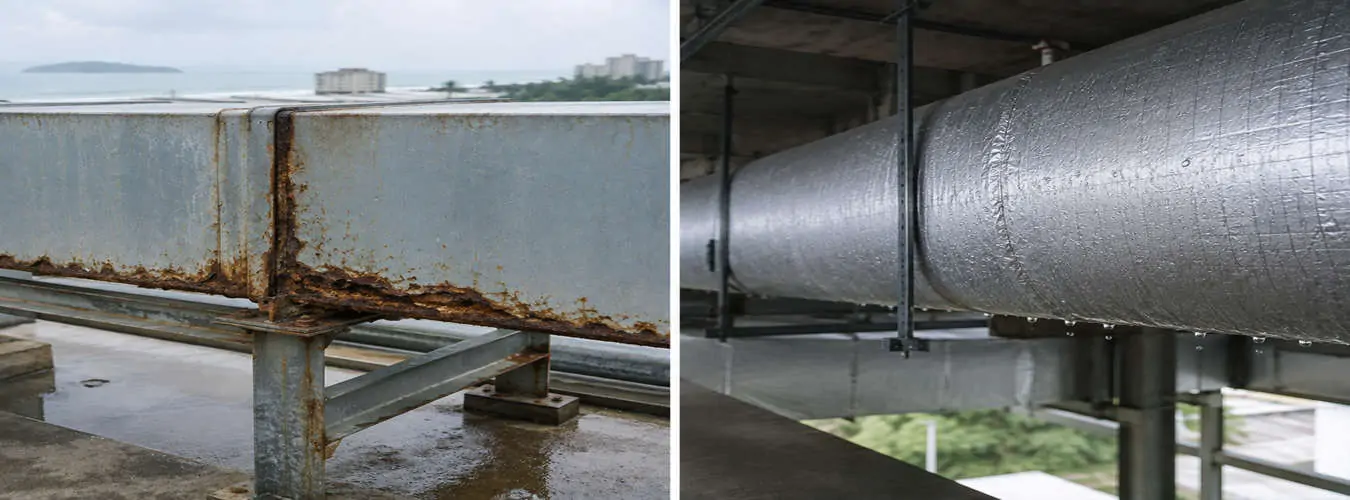
Two Major Risks for Coastal Outdoor Ductwork
Salt-Spray Corrosion
Salt carried by sea air can accumulate on the surface of ductwork. Under high-humidity conditions, these salt deposits can form a corrosive electrolyte that continuously attacks metal substrates, flanges, fasteners, and other exposed components.
Conventional galvanized components and standard aluminum foil facings may deteriorate over prolonged exposure, resulting in coating degradation, white rust, localized perforation, and damage to the vapor barrier. Once the protective layer is compromised, moisture can penetrate more easily and accelerate the aging and performance degradation of the insulation system.
Condensation Risk
Coastal regions typically experience high relative humidity throughout much of the year. When the surface temperature of a duct falls below the ambient dew point, moisture in the air can condense on the external duct surface and around flange joints, resulting in visible water droplets and dripping.
Persistent condensation can damage surrounding finishes and electrical equipment. More importantly, once condensed water penetrates through joints or gaps into the insulation core, it can reduce thermal insulation performance and create conditions favorable for mold growth.
Key Components of the GFI Pre-Coated GI Pre-Insulated Ductwork Solution
Pre-coated GI as the external protective substrate, combined with high-performance insulation cores, salt-spray-resistant protective facings, and a complete range of corrosion-resistant sealing components.Multi-layer protection system specifically addresses the demands of coastal outdoor and semi-exposed applications, high-humidity industrial facilities, seaside exhibition centers, and other challenging environments.
Pre-Coated GI External Layer: A Dual Barrier Against Salt-Spray Corrosion
Pre-painted GI steel forms the ductwork’s external protective layer. Pre-coated surface offers better resistance to salt-spray exposure and helps prevent corrosion, coating deterioration. The duct system can retain PIR/PUR foam cores to maintain the required thermal insulation and fire performance.
Upgraded Weather-Resistant Vapor Barrier Facings for Enhanced Condensation Control
For different levels of outdoor exposure, GFI offers enhanced facing options:
–Enhanced Salt-Spray-Resistant Aluminum Foil Facing:A reinforced substrate combined with a salt-spray-resistant coating, suitable for semi-sheltered applications and projects subject to indirect exposure to sea air.
–Black UV-Resistant Weatherproof Composite Facing:Designed for direct outdoor exposure, this facing provides resistance to ultraviolet radiation and salt spray. Its continuous vapor barrier helps limit moisture penetration and reduces the conditions that can lead to external condensation.
Corrosion-Resistant Sealing Components for a Complete Vapor-Tight System
To ensure long-term system performance. GFI provides a complete range of sealing and connection components designed for high-humidity and coastal environments.
–Heavy-Duty Salt-Spray-Resistant Aluminum Foil Tape: Use it on panel joints, seams, and facing repairs to create a continuous vapor barrier and protect vulnerable areas.
–Pre-Coated GI Corrosion-Resistant Flange Profiles:Use dedicated sealing grooves and compatible materials to reduce the risk of galvanic corrosion between dissimilar metals.
–High-Humidity Mold-Resistant Sealant: Apply it to deeper flange joints and gaps. It remains flexible after curing and resists salt spray and mold while maintaining compatibility with the insulation core.
–Stainless Steel Corrosion-Resistant Fasteners: Use corrosion-resistant bolts, screws, and rivets to prevent fasteners from becoming the first failure points in harsh coastal environments.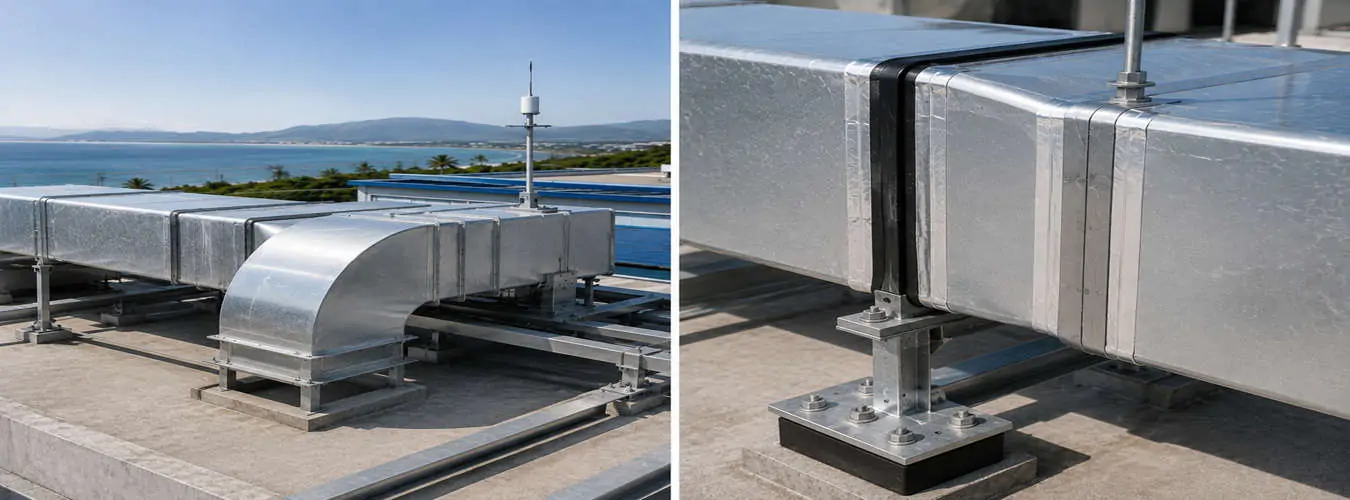
Key Installation Practices for Coastal Projects
Material selection is only one part of achieving long-term performance. Proper installation also plays a key role in coastal and high-humidity environments. GFI recommends that contractors pay close attention to the following installation practices:
1.Minimize Direct Exposure to Wind and Rain
Where possible, avoid placing ductwork directly in the path of prevailing winds. Add weather protection such as sunshades or rain covers to reduce direct exposure to salt spray and rainwater.
2. Fully Protect All Cuts and Penetrations
All cut edges, openings, and penetrations must be properly sealed with corrosion protection and protective tape.
3. Apply Double Sealing at Flange Connections
Apply the specified sealant to flange joints first, followed by salt-spray-resistant aluminum foil tape as a secondary vapor barrier. This dual-sealing approach helps improve both moisture protection and long-term airtightness.
4. Use Corrosion-Resistant Supports and Minimize Thermal Bridging
Duct supports and suspension components should be made from hot-dip galvanized steel or stainless steel. Insulating pads should be installed between the supports and ductwork where appropriate to reduce thermal bridging and minimize the risk of localized condensation.
5. Provide Appropriate Drainage
Where the system configuration requires it, provide a suitable drainage slope so that any small amount of condensate can be effectively discharged rather than accumulating within the system.
6. Minimize On-Site Cutting
Whenever possible, use factory-fabricated straight sections, elbows, reducers, and other duct components. Reducing on-site cutting and modification helps minimize damage to protective facings and improves the consistency of the overall protective system.
Conclusion
The long-term performance of pre-insulated ductwork in coastal and high-humidity environments depends on the combined performance of materials, components, and installation practices. The insulation core alone cannot fully address salt-spray corrosion and condensation.
The pre-coated GI pre-insulated ductwork solution combines four key elements:
Salt-spray-resistant external substrate + weather-resistant vapor barrier facing + corrosion-resistant sealing components + standardized installation practices
Together, these elements provide comprehensive protection against the two main challenges in coastal HVAC applications: salt-spray corrosion and external condensation.
CONTACT
Laissez-nous un message et notre équipe vous recontactera rapidement.