
 French
  Arabic
  Chinese
  English
  German
  Portuguese
  Russian
  Spanish
  Thai
Thai  Vietnamese

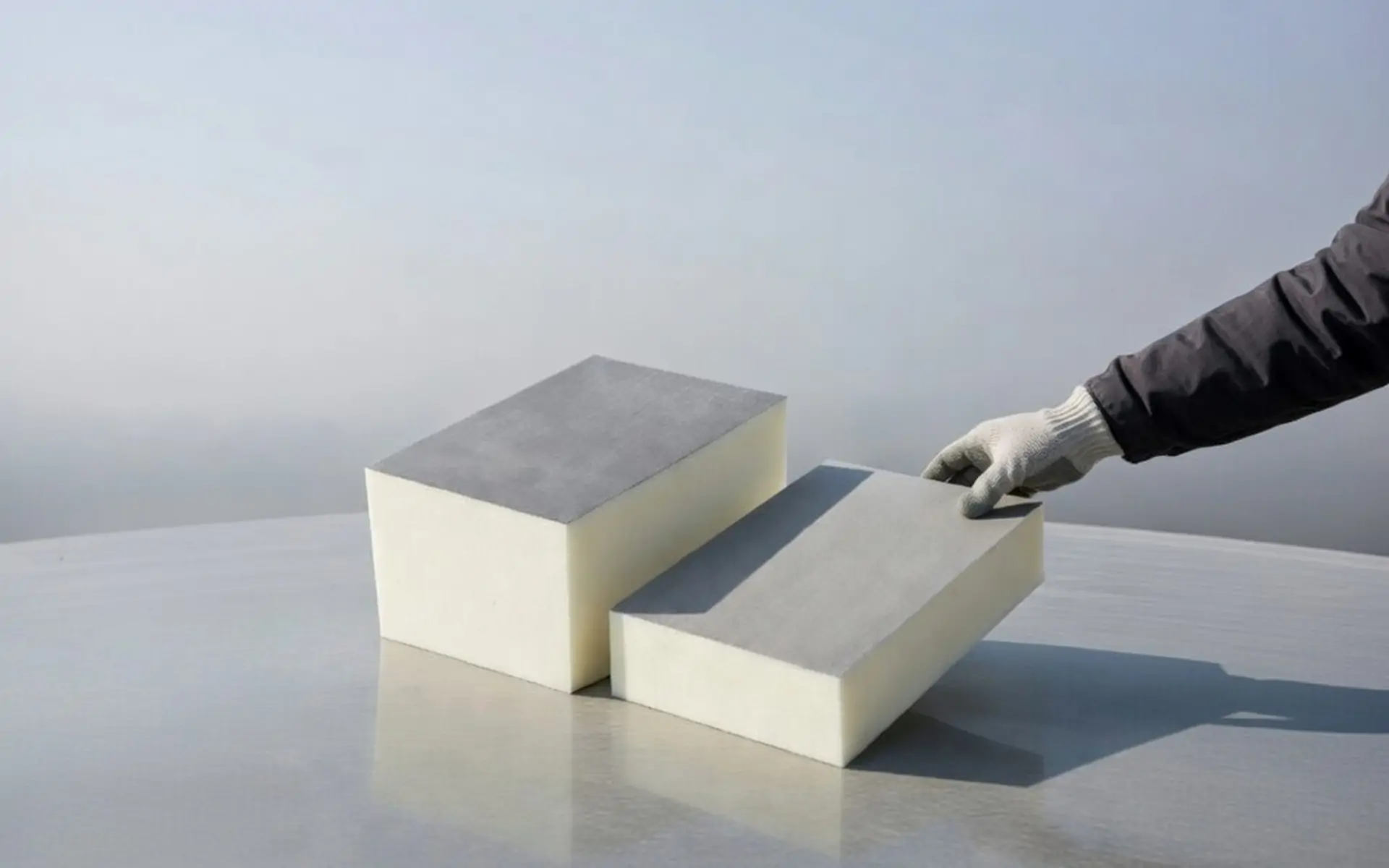
As global building energy standards continue to rise, the thermal performance of building envelopes has become a critical factor influencing overall energy consumption. In commercial buildings, industrial facilities, and large public infrastructure, HVAC systems often account for a significant portion of total building energy use.
For this reason, reducing heat transfer through high-performance insulation materials has become one of the most effective strategies for improving building energy efficiency.
Among various insulation materials, polyurethane insulation boards have gained widespread adoption due to their excellent thermal insulation performance and lightweight structure. When properly applied in building envelopes and HVAC systems, polyurethane insulation boards can significantly reduce heating and cooling loads, helping buildings achieve higher energy efficiency.

Excellent Thermal Insulation Performance Reduces Energy Loss
A large portion of building energy loss occurs through heat transfer in the building envelope, such as exterior walls, roofs, and duct systems.
Polyurethane insulation boards belong to the category of rigid closed-cell foam insulation materials. Their internal structure consists of uniform, fine closed cells that effectively reduce heat conduction.
Compared with many traditional insulation materials, polyurethane insulation boards typically offer lower thermal conductivity, meaning they can provide better insulation performance even at the same thickness.
This allows buildings to:
- Reduce indoor heat loss during winter
- Minimize external heat gain during summer
- Lower the operating load on air conditioning systems
For buildings that rely heavily on HVAC systems, this high-efficiency insulation can significantly reduce long-term energy consumption.

Reducing Heating and Cooling Loads in HVAC Systems
In modern buildings, HVAC systems play a vital role in maintaining indoor temperature and air quality. However, when the building envelope lacks proper insulation, HVAC equipment must consume more energy to maintain stable indoor conditions.
By incorporating polyurethane insulation boards into exterior walls and roof structures, heat exchange between indoor and outdoor environments can be greatly reduced. This helps maintain a more stable indoor temperature.
As a result:
- HVAC systems operate more efficiently
- Equipment load is reduced
- Long-term energy consumption is lowered
In large commercial buildings and industrial facilities, a well-designed insulation system can significantly reduce the operational costs of HVAC systems over time.
Lightweight Structure Reduces Structural Load
Compared with some traditional insulation materials, polyurethane insulation boards provide high strength while maintaining relatively low weight.
This lightweight characteristic offers several advantages:
- Easier transportation and installation
- Reduced structural load on buildings
- Greater flexibility in architectural design
In high-rise buildings or large-span structures, material weight is an important design consideration. Using lightweight, high-efficiency insulation materials allows engineers to maintain excellent thermal performance while optimizing structural design.

Improving the Airtightness of Building Envelopes
The airtightness of a building envelope also plays an important role in overall energy efficiency. If gaps exist in exterior walls or roofs, air infiltration can lead to unwanted heat exchange between indoor and outdoor environments.
Polyurethane insulation boards are typically installed in panel form and connected through precise joints and sealing methods to form a continuous insulation layer.
This installation method helps:
- Reduce air leakage
- Improve overall airtightness
- Enhance the thermal performance of the building envelope
As a result, HVAC systems require less energy to maintain comfortable indoor conditions.
Wide Applications in Energy-Efficient Building Systems
Thanks to their excellent thermal insulation properties and structural stability, polyurethane insulation boards are widely used in many building and industrial systems, including:
- Exterior wall insulation systems
- Roof insulation structures
- Cold storage and cold chain facilities
- Industrial equipment insulation
- Pre-insulated HVAC duct systems
In these applications, polyurethane insulation materials not only improve insulation performance but also enhance overall system efficiency.
Conclusion
As energy efficiency requirements continue to increase in the construction industry, high-performance insulation materials play an increasingly important role in modern building design.
With their low thermal conductivity, lightweight structure, and strong airtight performance, polyurethane insulation boards can effectively reduce heat loss, lower HVAC system loads, and improve overall energy efficiency.
For commercial buildings, industrial facilities, and large public infrastructure projects, the proper use of polyurethane insulation boards has become an important strategy for achieving more energy-efficient and sustainable buildings.
CONTACT
Laissez-nous un message et notre équipe vous recontactera rapidement.