
 Spanish
  Arabic
  Chinese
  English
  French
  German
  Portuguese
  Russian
  Thai
Thai  Vietnamese


In HVAC systems, Pre-Insulated air duct leakage is one of the key factors that reduces system efficiency, increases energy consumption, and negatively impacts indoor air quality. This issue is particularly relevant in PIR, PU, and phenolic Pre-Insulated Duct System Although these ducts offer inherent advantages due to their integrated structure, improper design or installation can still result in poor airtightness.
This article systematically explains how to improve airtight performance in Pre-Insulated Duct System from three aspects: leakage causes, sealing technologies, and testing standards.

1. Main Causes of Pre-Insulated Air Duct Leakage
Pre-Insulated Air duct leakage is usually not caused by a single factor, but rather a combination of design, material, and installation issues:
1.1 Poor Joint Sealing
Pre-Insulated composite ducts are assembled through panel connections.
If joints are not properly sealed or adhesive is unevenly applied, small gaps can form and cause leakage.
1.2 Loose Flange Connections
Flange systems (such as PVC or aluminum flanges) can become major leakage points if not properly installed or if gaskets are not fully compressed.
1.3 Improper Sealing Materials
Low-quality sealants or materials not suitable for HVAC systems may crack or age over time due to temperature variations and long-term operation.

1.4 Improper Installation Practices
Examples include:
- Discontinuous adhesive application
- Unpressed joints
- Poor corner finishing
These issues significantly reduce airtightness.
1.5 High System Pressure
In medium- to high-pressure systems (>1000 Pa), leakage risks increase if enhanced sealing measures are not applied.
2. Key Sealing Technologies for Pre-Insulated Composite Ducts
Improving airtightness requires optimization of structure, materials, and installation processes:
2.1 Joint Sealing Techniques
- Use double sealing structure (internal + external sealing)
- Apply specialized adhesive continuously
- Add aluminum foil tape for secondary sealing
Key point: Ensure no gaps, bubbles, or contamination.
2.2 Flange System Optimization
- Common solutions include:
- Insert-type flange with sealing strips
- Aluminum flange with butyl rubber gasket
- Hidden flange systems for better airtightness
Recommendation:
For medium- and high-pressure systems, prioritize flange systems with sealing gaskets.
2.3 Corners and Special Areas
- Use prefabricated corner pieces or reinforced sealing
- Add extra sealing layers at tees and elbows
- Prevent stress concentration and cracking

3. Guide to Sealing Material Selection
Choosing the right sealing material is critical for long-term airtightness:
3.1 Butyl Sealant
- Excellent airtightness and adhesion
- Good aging resistance
- Suitable for flange and joint sealing
Recommended for high-performance projects
3.2 PU Sealant (Polyurethane)
- High elasticity for structural movement
- Strong bonding strength
- Suitable for dynamic areas
3.3 Aluminum Foil Tape
- Used for surface sealing and protection
- Provides an additional airtight layer
- Commonly applied on outer joints
3.4 Gaskets
- Common materials: rubber, EPDM
- Used in flange connections
- Provide compressible sealing
4. Airtightness Testing Methods (SMACNA Standard)
In international projects, pre-Insulated duct airtightness is typically tested according to SMACNA standards.
4.1 Leakage Classes
SMACNA defines leakage classes such as:
- Class 3 (high airtightness)
- Class 6 (medium level)
- Class 12 (general level)
Lower values indicate better airtightness.
4.2 Testing Methods
Common methods include:
- Positive/negative pressure testing
- Airflow balance testing
- Smoke testing for leakage detection
4.3 Key Metrics
- Leakage rate per unit area (L/s·m²)
- Total system leakage rate (%)
- Pressure level (Pa)
Engineering Tip:
Conduct full system airtightness testing after installation for critical projects.
5. Practical Engineering Recommendations
5.1 Design Stage
- Define airtightness requirements
- Select suitable duct structure
5.2 Material Stage
- Use high-quality sealants and flange systems
- Avoid low-cost substitutes
5.3 Installation Stage
- Follow strict construction standards
- Strengthen inspection at critical points
5.4 Inspection Stage
- Test according to SMACNA standards
- Re-seal any non-compliant areas
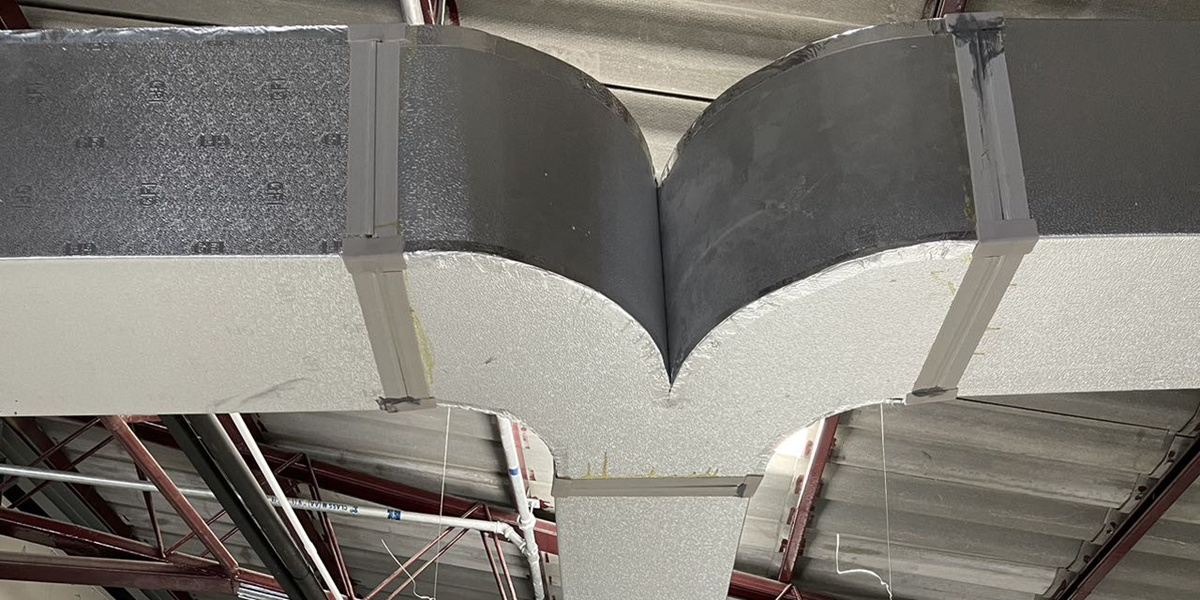
6. Advantages of Pre-Insulated Composite Duct Systems
Compared to traditional galvanized steel ducts, PIR/PU/phenolic pre-Insulated composite ducts offer:
- Fewer joints
- Integrated structure with fewer leakage paths
- Easier achievement of high airtightness standards
- However, proper installation and sealing are essential.
Conclusión
Pre-Insulated air duct leakage not only reduces HVAC system efficiency but also increases energy costs and operational risks.
Through proper design, correct material selection, standardized installation, and SMACNA-based testing, the airtightness and overall performance of pre-Insulated composite duct systems can be significantly improved.
CONTACTO
Déjanos un mensaje y nuestro equipo se pondrá en contacto contigo lo antes posible.