
 English
  Arabic
  Chinese
  French
  German
  Portuguese
  Russian
  Spanish
  Thai
Thai  Vietnamese

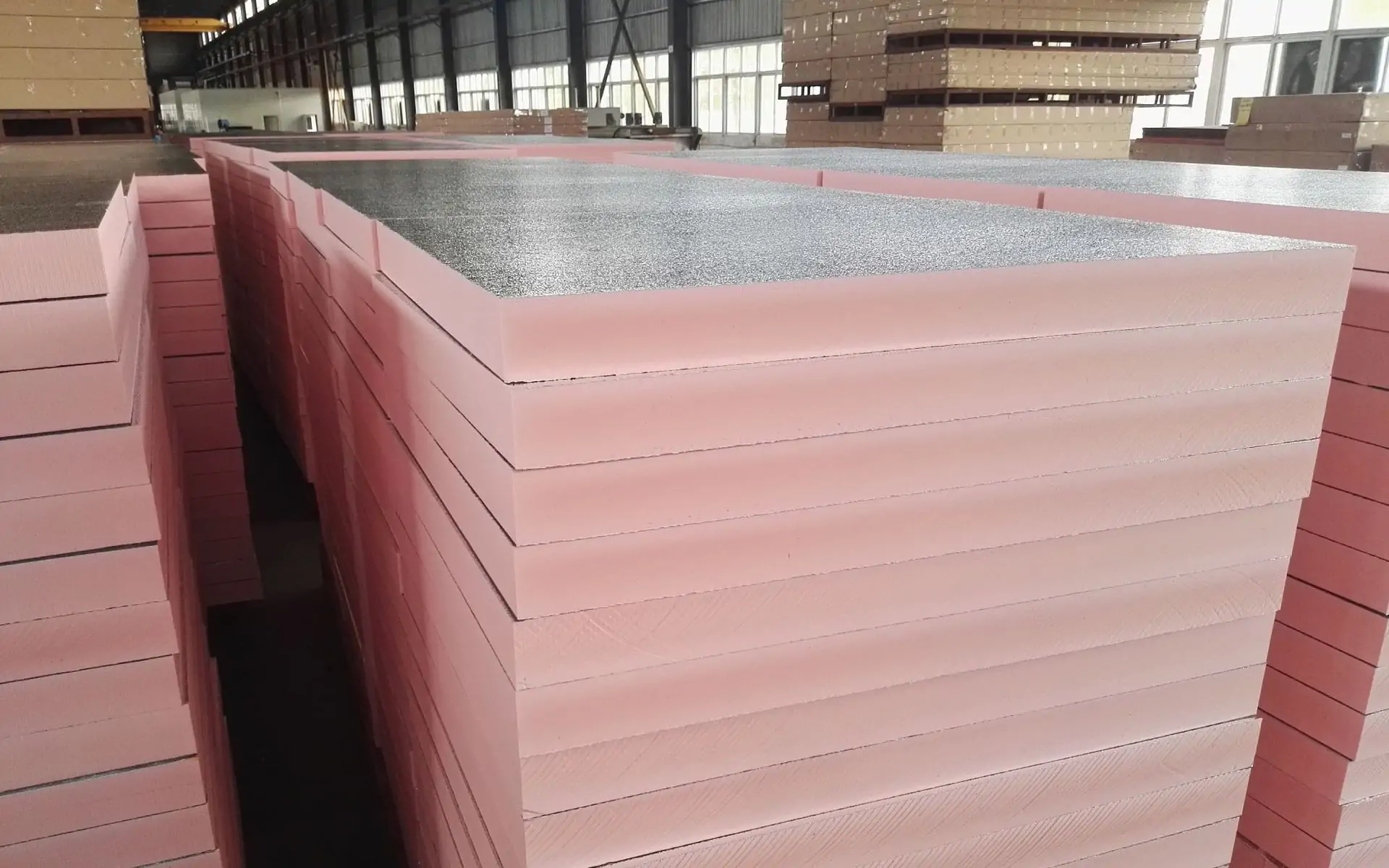
In modern HVAC and building insulation systems, phenolic foam insulation boards are increasingly recognized for their exceptional fire resistance, thermal efficiency, and long-term structural stability. Compared with traditional materials such as polyurethane (PU), phenolic foam maintains its strength and insulation performance over time—even in demanding conditions involving heat, moisture, or pressure changes.

1. Chemical Stability and Dimensional Accuracy
Phenolic foam is produced by polymerizing phenol and formaldehyde, resulting in a rigid closed-cell structure with excellent stability. Unlike PU or PIR boards, phenolic foam insulation boards exhibit minimal dimensional change during long-term use. They retain their shape and strength even under heat, humidity, or mechanical stress, ensuring consistent airtightness in HVAC duct systems and building envelopes.
| Property | Standard | Specification |
| Standard Width | 600/1200mm | |
| Thickness | 20-100mm | |
| Foam Density | 40-60kg/m³ | |
| CFCs and HCFCs | Headspace GC/MS | Free |
| Thermal Conductivity | 0.02W/m.K | |
| Fire Rating |
BS 476 ASTM E-84 UL94-1998 |
Class 0 Class A 94V-0 |
|
Water Vapor Transmission (at 23°C, 50% R.H., 8.26mm thickness, 12 days) |
ASTM E96-05 | 0.05g/hr/Sqm |
| Water Absorption (% by volume) | ASTM C209-98 | 0.25 |
| Compressive Strength | ASTM D1621-00 | 137.7psi |
| Dimensional Stability | ASTM D 2121-99 | 0.3% |
| Tensile Strength | ASTM D1623-00 | 61.4psi |
2. Superior Fire Resistance and Thermal Aging Performance
One of the most notable advantages of phenolic foam is its outstanding fire resistance. The material has an extremely low flame spread rate and produces very little smoke during combustion. A carbonized surface layer forms when exposed to high temperatures, effectively preventing further burning.
With a thermal conductivity as low as 0.02 W/m·K, the thermal insulation board maintains its efficiency for years with minimal thermal aging. This ensures long-lasting energy savings and reliable performance in both commercial and industrial buildings.
3. Moisture Resistance and Surface Protection
Most phenolic foam insulation boards are laminated with aluminum or kraft on both sides, creating a strong moisture barrier that prevents vapor penetration. This structure enhances corrosion resistance and reduces microbial growth—an essential feature for HVAC systems in hospitals, food factories, or basements where humidity is high.
4. Structural Strength and Mechanical Stability
Thanks to its dense foam structure, phenolic foam offers high compressive and flexural strength. When used in ductwork or wall insulation, it withstands long-term thermal cycles and pressure variations without deformation or sagging. This ensures durable mechanical stability and reliable system performance over decades of operation.
5. Sustainability and Long-Term Value
The long lifespan and low maintenance needs of phenolic foam make it a cost-effective rigid foam insulation solution. Its superior energy-saving ability aligns with modern green building standards—reducing operational costs and environmental impact. For HVAC contractors and builders, phenolic foam represents not only a material upgrade but also a long-term investment in energy-efficient performance.

Conclusion
Combining durability, fire safety, and thermal efficiency, phenolic foam insulation boards are an ideal solution for advanced HVAC and building insulation systems.
GFI Insulation provides high-quality phenolic, polyurethane (PU), and polyisocyanurate (PIR) insulation boards designed for commercial and industrial applications. Our insulation materials deliver reliable thermal performance, long service life, and outstanding protection for energy-efficient projects.
Contact GFI Insulation today to discover more durable and efficient insulation solutions that enhance comfort and sustainability in your next building project.

CONTACT US
Leave us a message and our team will get back to you soon.