
 German
  Arabic
  Chinese
  English
  French
  Portuguese
  Russian
  Spanish
  Thai
Thai  Vietnamese

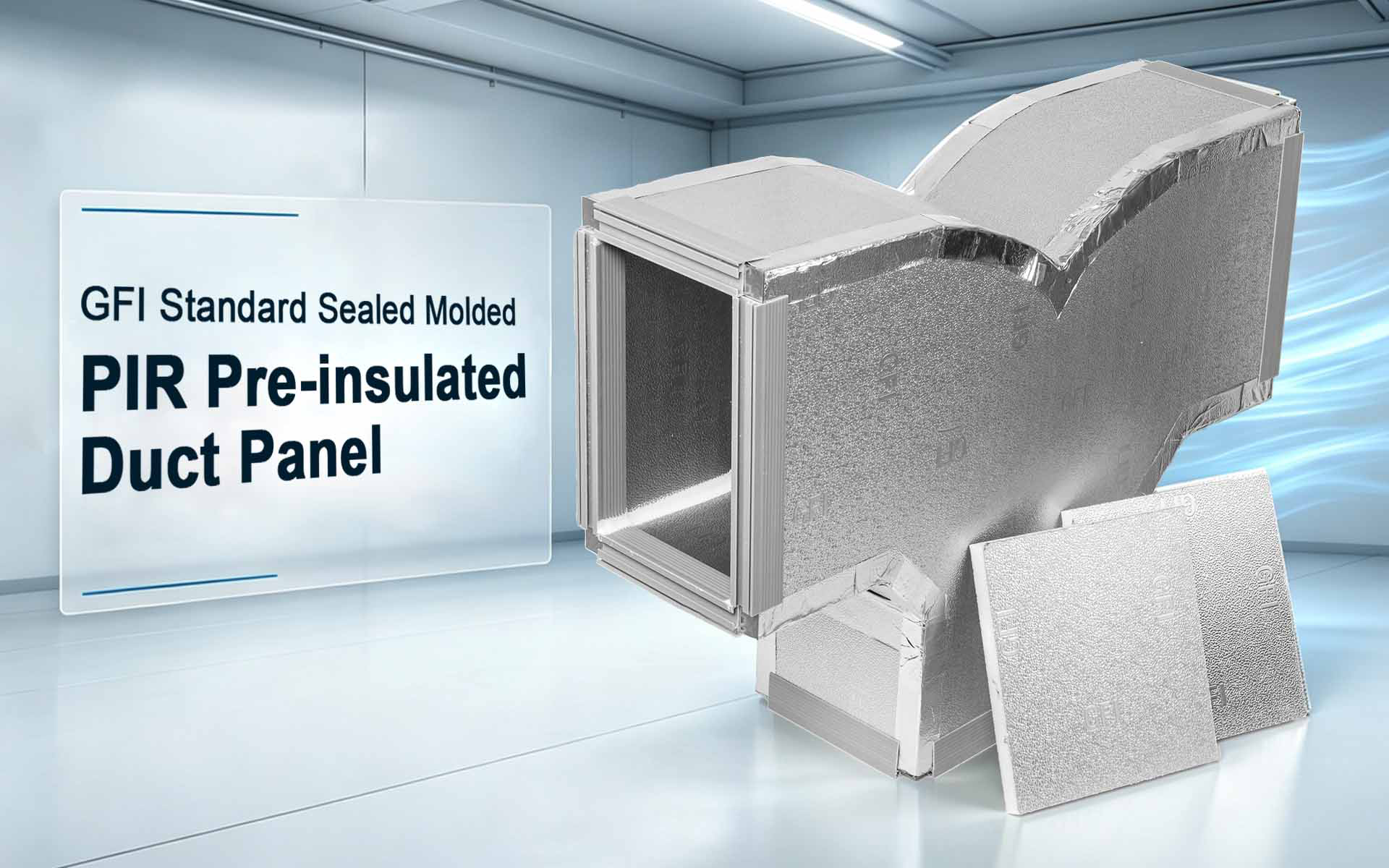
Condensation and water dripping on ductwork are prevalent issues in commercial HVAC projects. Many clients hold the misconception that PIR/PU insulated panels alone can fully prevent condensation. In reality, material selection, installation workmanship, sealing details and ambient humidity all directly trigger surface sweating and dripping on ducts. This problem is especially severe in coastal, tropical and high-humidity regions. After project completion, issues such as ceiling water seepage, mold growth, damaged ceiling panels and soaring air conditioning energy consumption frequently emerge.
Drawing on years of overseas project experience, GFI breaks down the core causes of condensation on vorisolierte Kanäle systems in detail.
Full Mechanism of Condensation on PIR/PU Insulation Ducts Panel
Condensation fundamentally arises from an imbalance between air humidity, ambient temperature and duct surface temperature.
PIR/PU pre-insulated ducts continuously convey chilled air at 10°C to 18°C inside, which lowers the overall temperature of duct panels. With qualified panels and fully sealed installation, the outer surface temperature of ducts stays above the ambient dew point to avoid condensation. However, defects in materials, construction or surrounding environments will drop the outer surface temperature below the dew point, leading to persistent water accumulation and dripping.
Key Causes of Condensation on PIR/PU Ducts
1. Damaged, Discontinuous or Failed Vapor Barrier
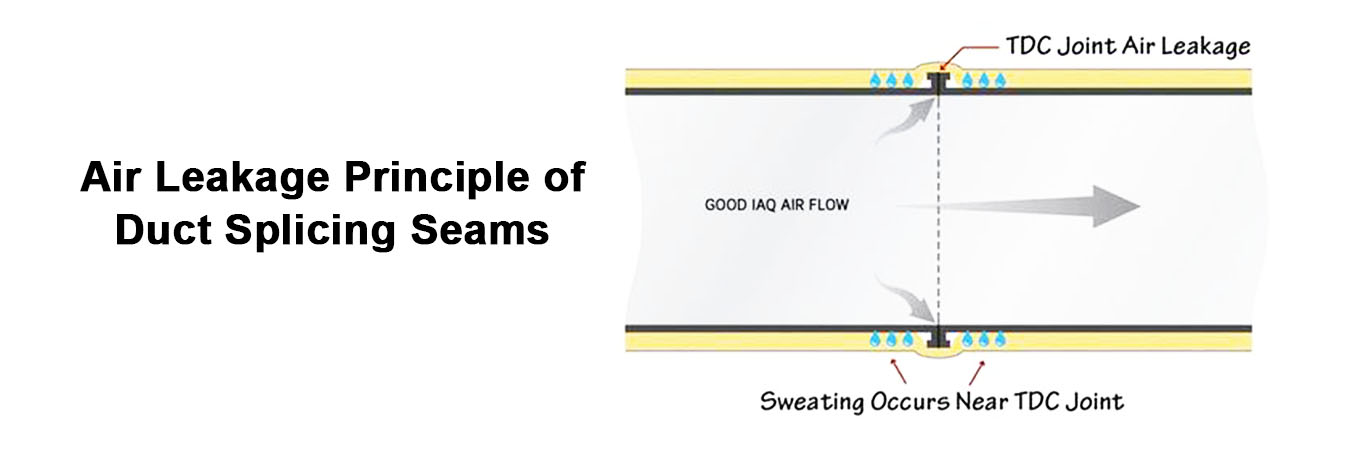
The aluminum foil facing on PIR/PU pre-insulated panels acts as the sole moisture-proof vapor barrier for ductwork. If cut edges, joint gaps and corner sections are not fully sealed, humid air penetrates the insulation layer and touches the low-temperature foam core, rapidly generating condensation. Most on-site condensation problems stem from poor sealing rather than defective base materials.
2. Substandard Panels with Poor Thermal Insulation Performance
Low-grade PIR/PU duct panels feature foam with low closed-cell ratio, large pores, uneven density and high thermal conductivity, resulting in drastically weakened thermal insulation. Such inferior panels fail to block cold transfer effectively, causing uniform sweating and widespread condensation across the entire duct surface under high humidity or enclosed ceiling conditions.
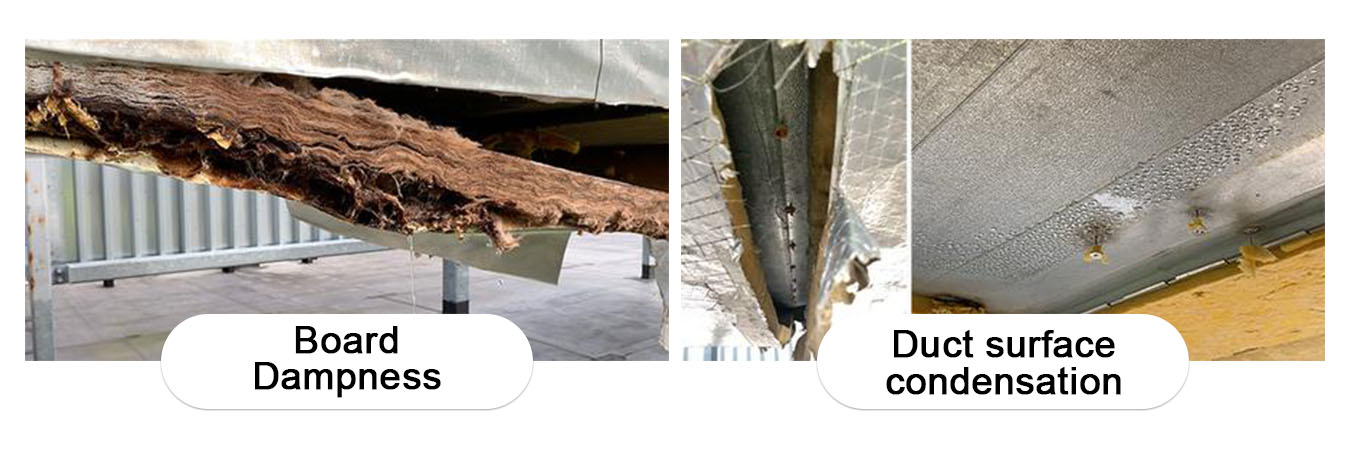
3. Excessively High On-site Humidity & Unventilated Ceiling Cavities
Duct installation is concealed work. Many contractors rush construction before the site meets standard requirements, leaving hidden condensation risks. Typical unfavorable conditions include unfinished decoration, un-dried wall surfaces, fully airtight ceiling cavities and prolonged rainy weather, which keep humidity inside ceilings at excessive levels and greatly raise condensation risks.
4. Flaws in System Design & Installation Details
Some condensation troubles originate from unreasonable upfront design: Low-temperature ducts pass through non-air-conditioned zones, equipment mezzanines, attics or exterior wall ceilings without reinforced insulation; excessively low supply air temperature widens the temperature difference between inside and outside the duct.
Abschluss
These are the key causes of condensation on PIR/PU pre-insulated ducts. GFI strictly controls every process from foam production to standardized on-site installation. Adhering to high manufacturing standards and providing full construction guidance, we offer customized duct thicknesses, surface facings and supporting accessories.
KONTAKT US
Hinterlassen Sie uns eine Nachricht, unser Team meldet sich umgehend bei Ihnen.